Why sandstone suits the Coast
Sydney and the Central Coast sit on sandstone, so it naturally belongs in our gardens. Its warm honey, cream and ochre tones sit beautifully against native planting, timber and water, and its texture gives grip underfoot. Each block is different, so no two walls are ever the same.
The main forms of sandstone
- Dimension blocks: sawn rectangular blocks for retaining walls, terraces and seating walls with crisp, architectural lines.
- Split or rock-face blocks: a rugged, hand-split face for a natural look.
- Boulders and logs: large irregular pieces for informal terraces and bush settings.
- Cladding: thin stone veneer over a block or concrete core, for feature walls and fireplaces.
- Flagging and pavers: sawn or split slabs for paths, steps and terraces.
- Treads and capping: thick sawn pieces for stairs, wall tops and pool coping.
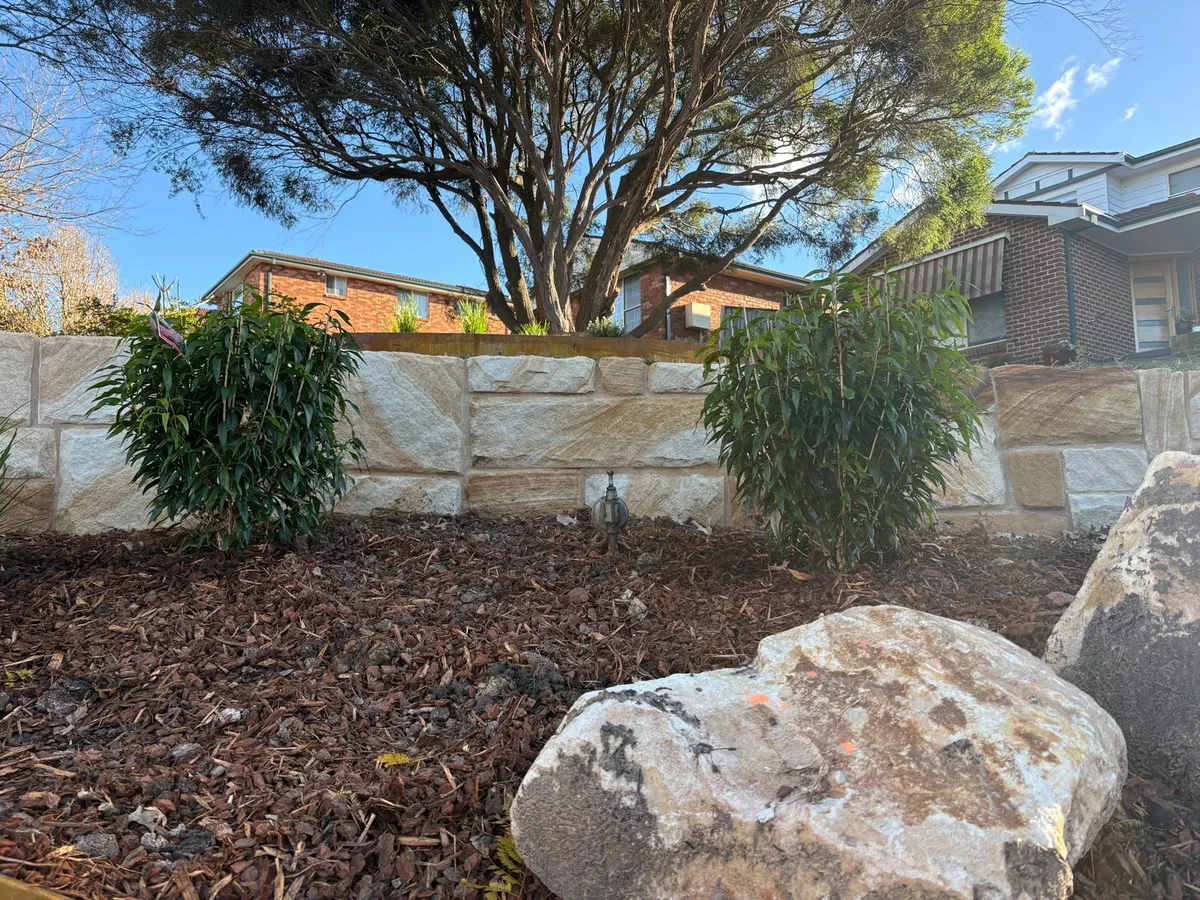
Retaining walls and terraces
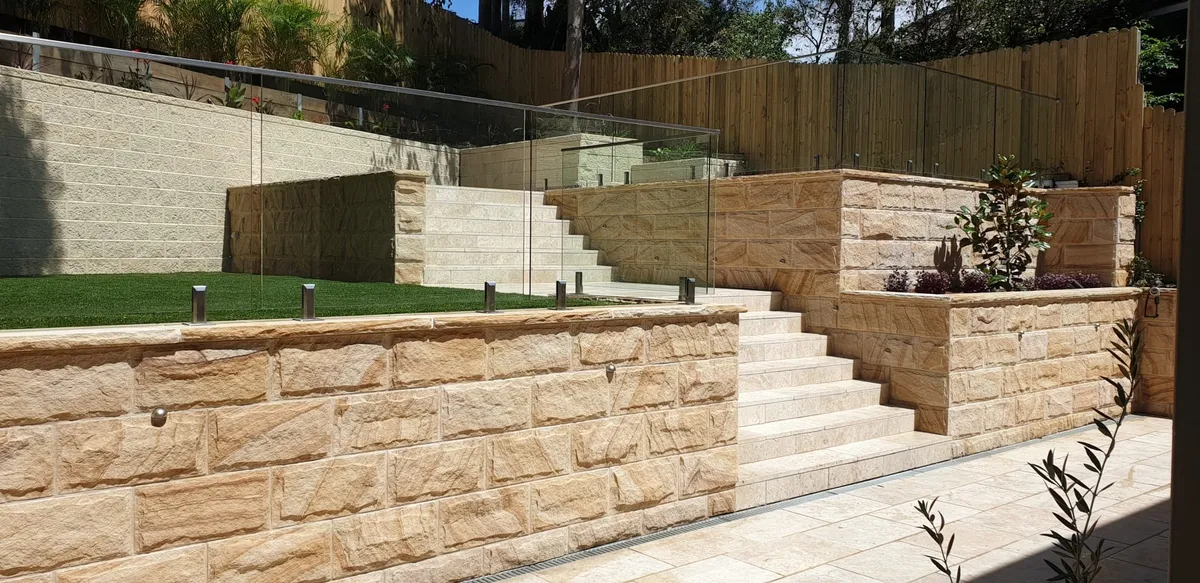
Sandstone block walls are strong, long-lived and well suited to stepped terraces on sloping blocks. Like any retaining wall, they need proper footings, drainage behind the wall and, for taller walls, engineering. Capped with a sawn coping stone, they double as seating.
A good sandstone wall shouldn't look new for long. Within a season or two it should look as if it has always been there.
Steps, paths and paving
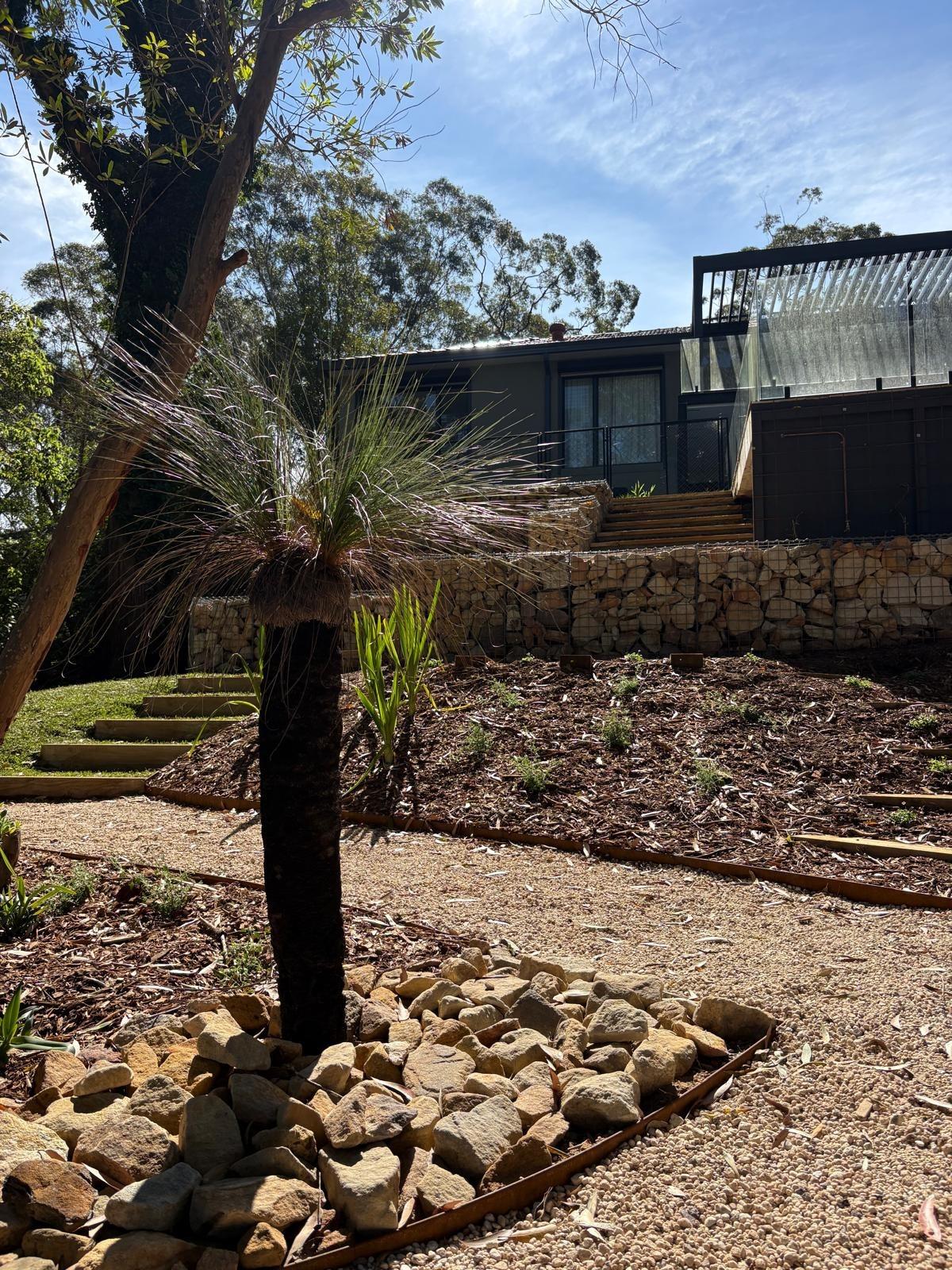
Sawn sandstone treads make generous, comfortable stairs, whether set between walls or floating over gabions or blockwork. Flagging works for paths and terraces; choose textured or sawn-and-sandblasted finishes for grip where it gets wet.
Cladding and feature walls
Where full blocks aren't practical, sandstone cladding gives the same look over a structural core: feature walls, fireplaces, planters and the faces of retaining walls. It's a cost-effective way to bring stone into a design.
Caring for sandstone in salt air
- Seal with a quality penetrating sealer that lets the stone breathe; avoid film-forming coatings.
- Reseal every few years, more often in high-splash areas and around pools.
- Clean gently with water and a soft brush; avoid acids and high-pressure blasting close to the surface.
- Keep drainage clear so water doesn't sit against walls, which helps prevent salt efflorescence and staining.
What pairs well with sandstone
Sandstone sits beautifully with hardwood decking, travertine or pale porcelain paving, glass balustrades and native planting such as grass trees, Lomandra and Westringia. Lit from below at night, a sandstone wall becomes the focal point of the garden.
Common questions
Is sandstone good for retaining walls?
Yes. Sandstone blocks are strong and long-lived, and suit stepped terraces. Like any retaining wall, they need footings, drainage and engineering for taller walls.
Does sandstone need sealing?
Yes, with a breathable penetrating sealer, reapplied every few years and more often near pools or the sea.
Is sandstone slippery when wet?
Its natural texture gives good grip. For steps, paths and pool areas choose textured or sandblasted finishes and keep surfaces clean.
Sandstone blocks or cladding?
Full blocks suit structural walls and terraces; cladding gives the same look over a block or concrete core at lower cost.
Planning something like this?
We'll walk the block with you and talk through ideas, timing and budget.
See our natural stone walls work