The brief: work with the bush
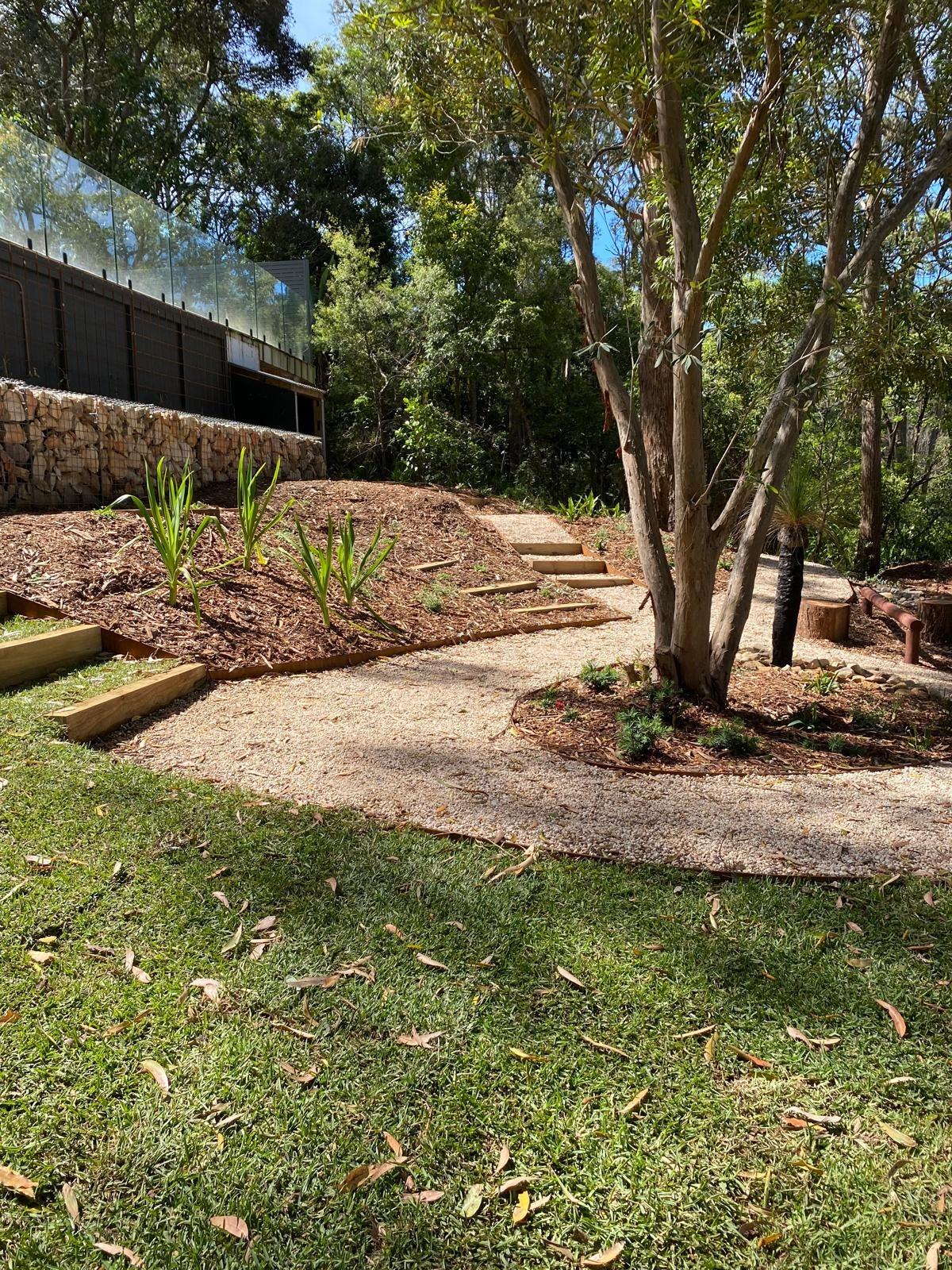
The block fell away steeply from the house into established eucalypts. The owners wanted somewhere to walk, sit and let the kids explore, without losing the bushland character that drew them to the property. The answer was a garden built from the same materials as the landscape around it: local stone, timber, gravel and native plants.
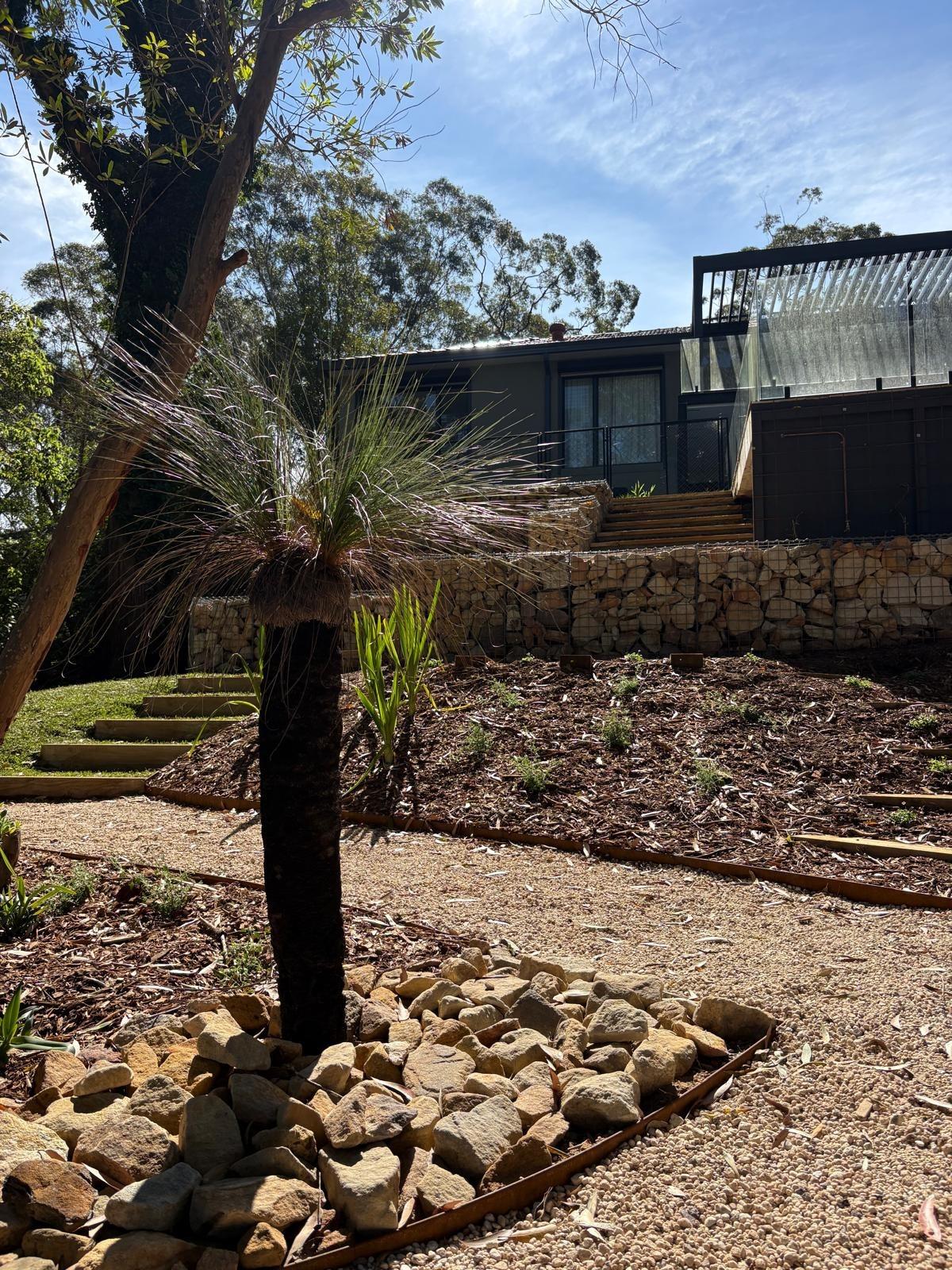
Gabion terraces to hold the slope
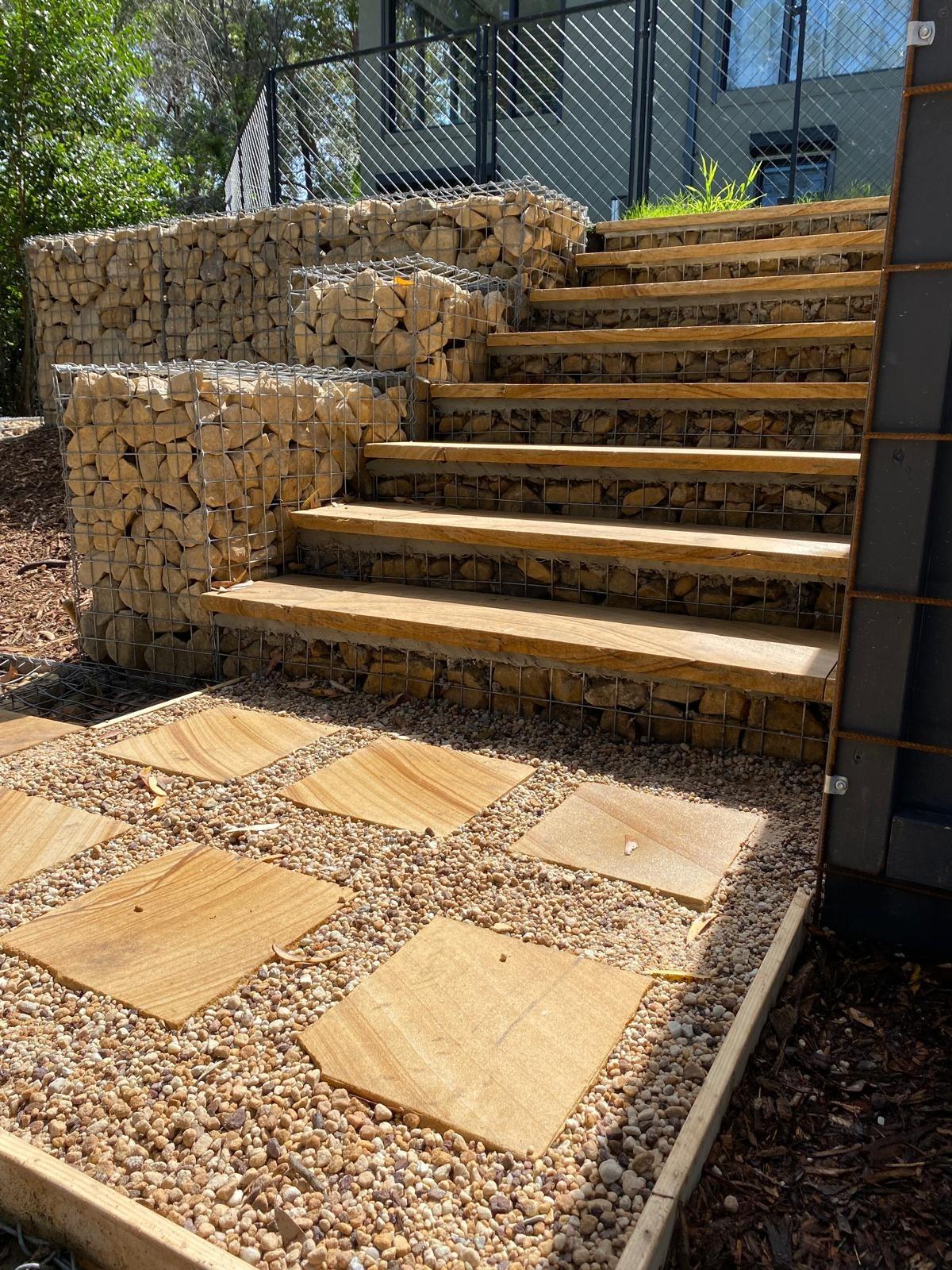
Gabions are steel mesh baskets filled with stone. They're strong, free-draining and flexible, which makes them ideal for steep cuts and bushland settings, and the stone weathers in rather than standing out.
- Stepped gabion walls created flat terraces and a generous landing below the deck.
- Sandstone treads set between gabion cheeks formed a stair that reads as one piece with the walls.
- Because gabions drain freely, water passes through rather than building up behind the wall.
Paths that wander
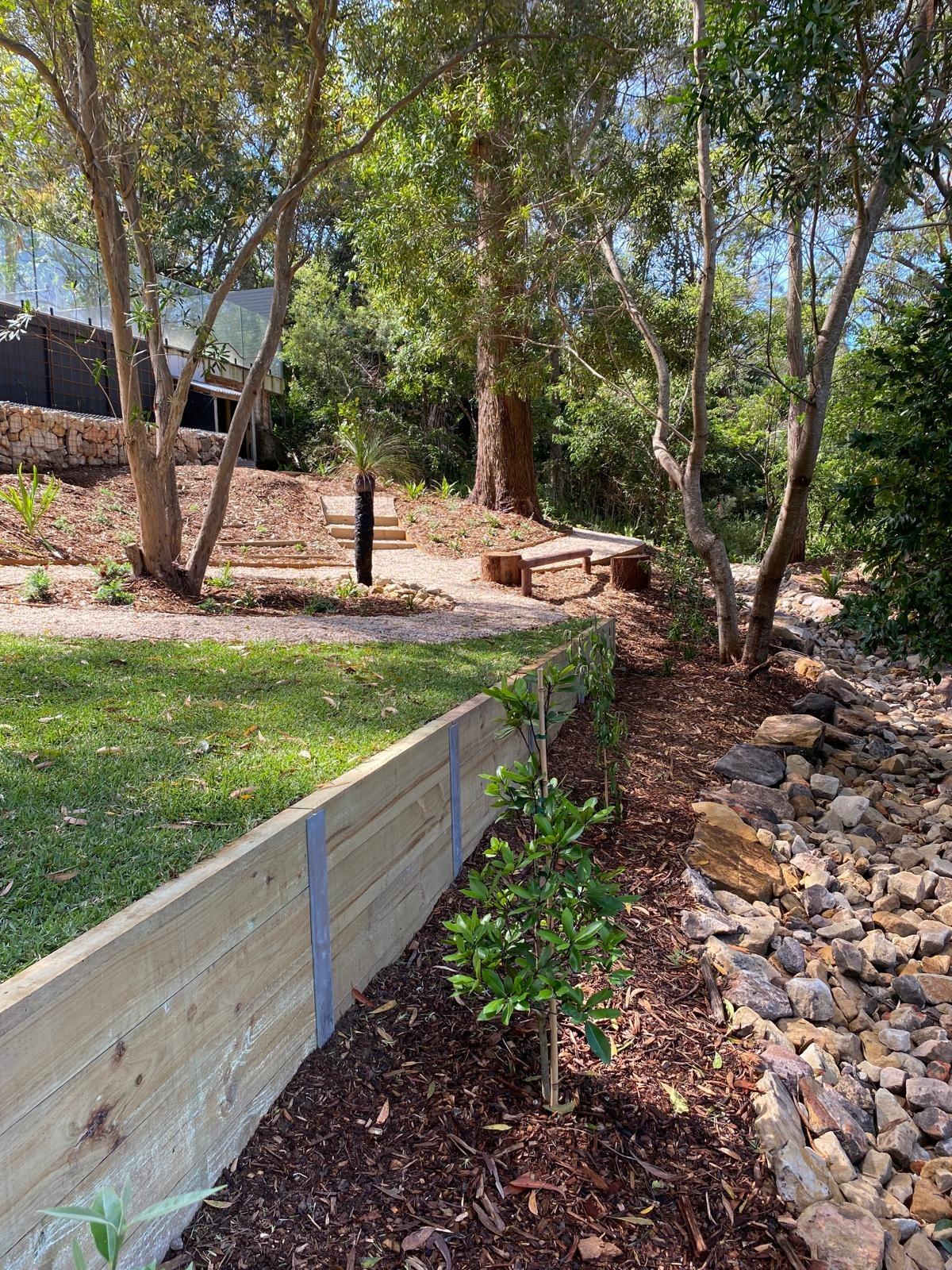
A gravel path loops through the garden, edged in corten steel that holds a clean line and weathers to a soft rust that sits naturally against bark and leaf litter. Timber sleeper steps climb the gentler slopes, and a log bench and timber stumps give places to pause under the trees.
A path that curves invites you to explore. In a bush garden, the walk is half the point.
Planting that belongs
- Grass trees as sculptural focal points, set in beds of local rock so their trunks stand out.
- Strappy natives and low groundcovers massed on the slopes to hold soil and cut maintenance.
- Mulched beds that keep moisture in and give young plants a strong start.
- Existing trees protected and celebrated, with paths routed around their roots.
Natives suited to Central Coast soils and climate establish quickly, use less water and bring birds and bees back into the garden.
Drainage and erosion control
On steep bush blocks, water is the biggest risk. A dry creek bed of local stone carries run-off through the garden, sleeper retaining holds the lower lawn, and the gabions and gravel let water soak away rather than run across the surface.
Ideas to borrow for your block
- Use materials from the landscape around you: local stone, timber and gravel.
- Terrace steep ground into a few usable levels rather than one tall wall.
- Let paths curve around trees and views.
- Choose a few sculptural plants and mass the rest.
- Plan the water first: where it lands, where it runs and where it soaks away.
Common questions
Are gabion walls good for retaining?
Yes. Gabions are strong and free-draining, which makes them well suited to steep cuts and bushland settings. Taller walls still need engineering.
What plants suit a bushland garden on the Central Coast?
Grass trees as features, strappy natives such as Lomandra and Dianella, and hardy groundcovers that hold the soil, chosen for your soil and aspect.
How do you stop erosion on a steep bush block?
Terrace the slope, mass-plant groundcovers, mulch the beds and give water a defined path, such as a dry creek bed, to carry run-off safely.
Planning something like this?
We'll walk the block with you and talk through ideas, timing and budget.
See our garden design & planting work