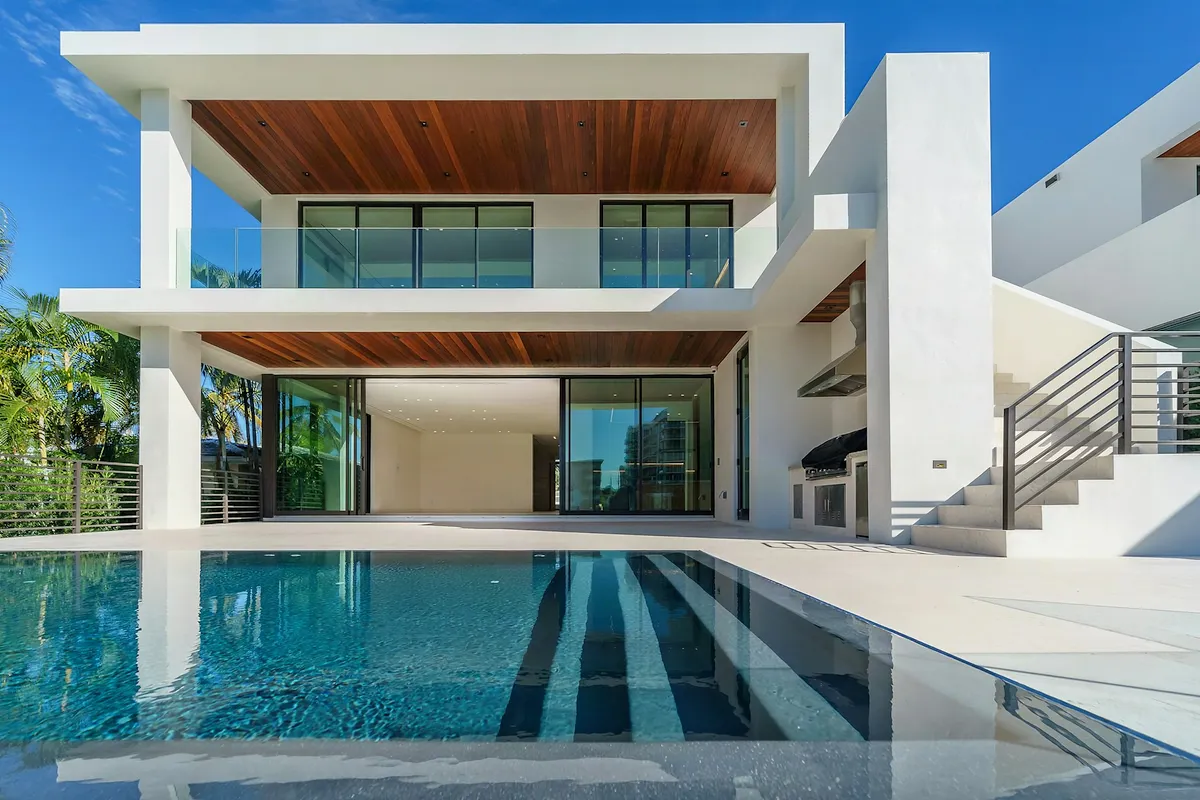
Why the finish matters
A concrete pool gives you a blank canvas. The interior finish decides the water colour, the texture under your feet, how the pool ages in coastal sun and salt, and how often it will need attention. It's worth choosing at the design stage, alongside the shape and the surrounds, rather than at the end.
The main interior finishes
- Fully tiled. Glass mosaic or porcelain tiles over every surface. The most refined and longest-lasting option, with crisp lines, endless colour choices and a smooth feel. It's also the highest investment because every tile is laid by hand.
- Pebble. Small natural pebbles bound in a cement matrix. Durable, naturally textured and good at hiding marks, with water colours from deep lagoon to pale sand. Slightly textured underfoot.
- Polished or honed aggregate. A pebble or quartz finish ground back to a smoother, satin surface. Softer to touch than standard pebble, with a refined, contemporary look.
- Render and paint. The entry-level finish. Lower cost upfront, but it needs repainting over time and suits budget or interim projects more than long-term homes.
Choosing the water colour
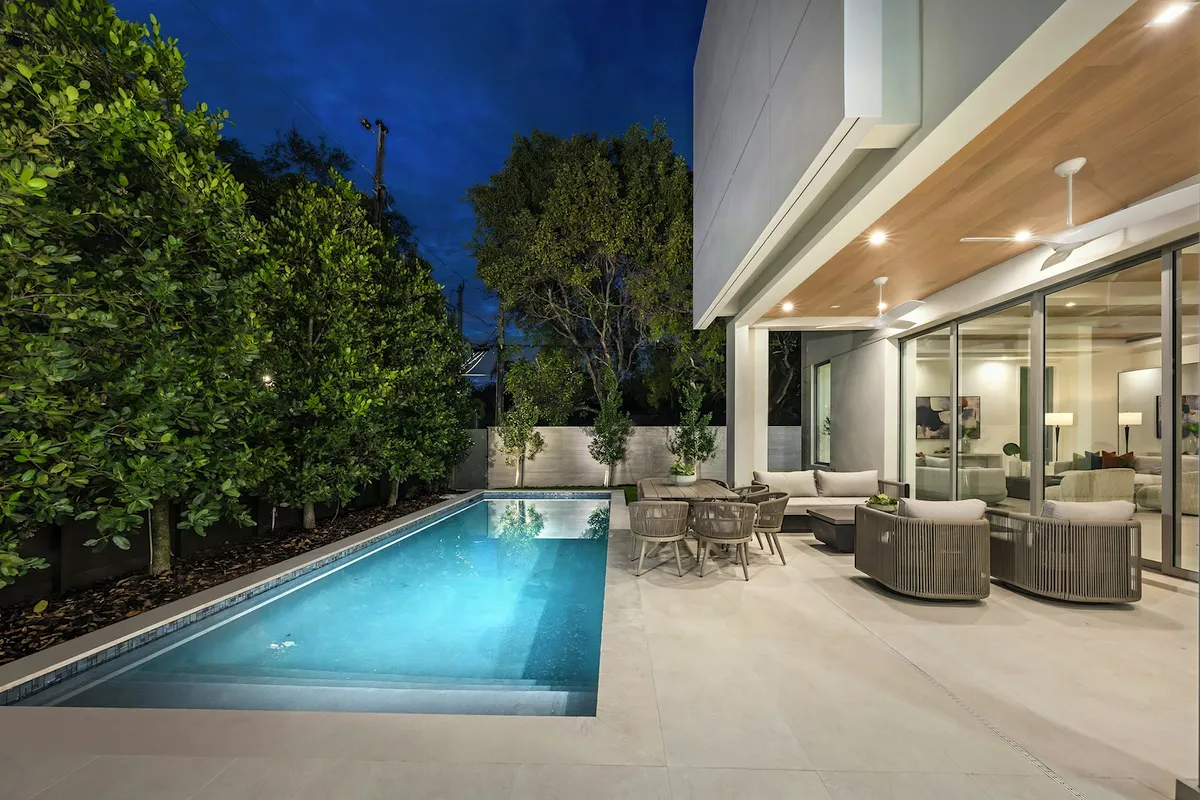
Lighter finishes give a bright, Caribbean blue; mid greys a natural ocean tone; dark charcoals a deep, reflective lagoon that suits bushland and architectural homes. Look at samples wet and in full sun on site, because colour shifts dramatically with depth, sky and surrounding planting.
Choose the finish with the garden in mind. The water should look like it belongs to the place around it.
Coping, waterline tiles and edges
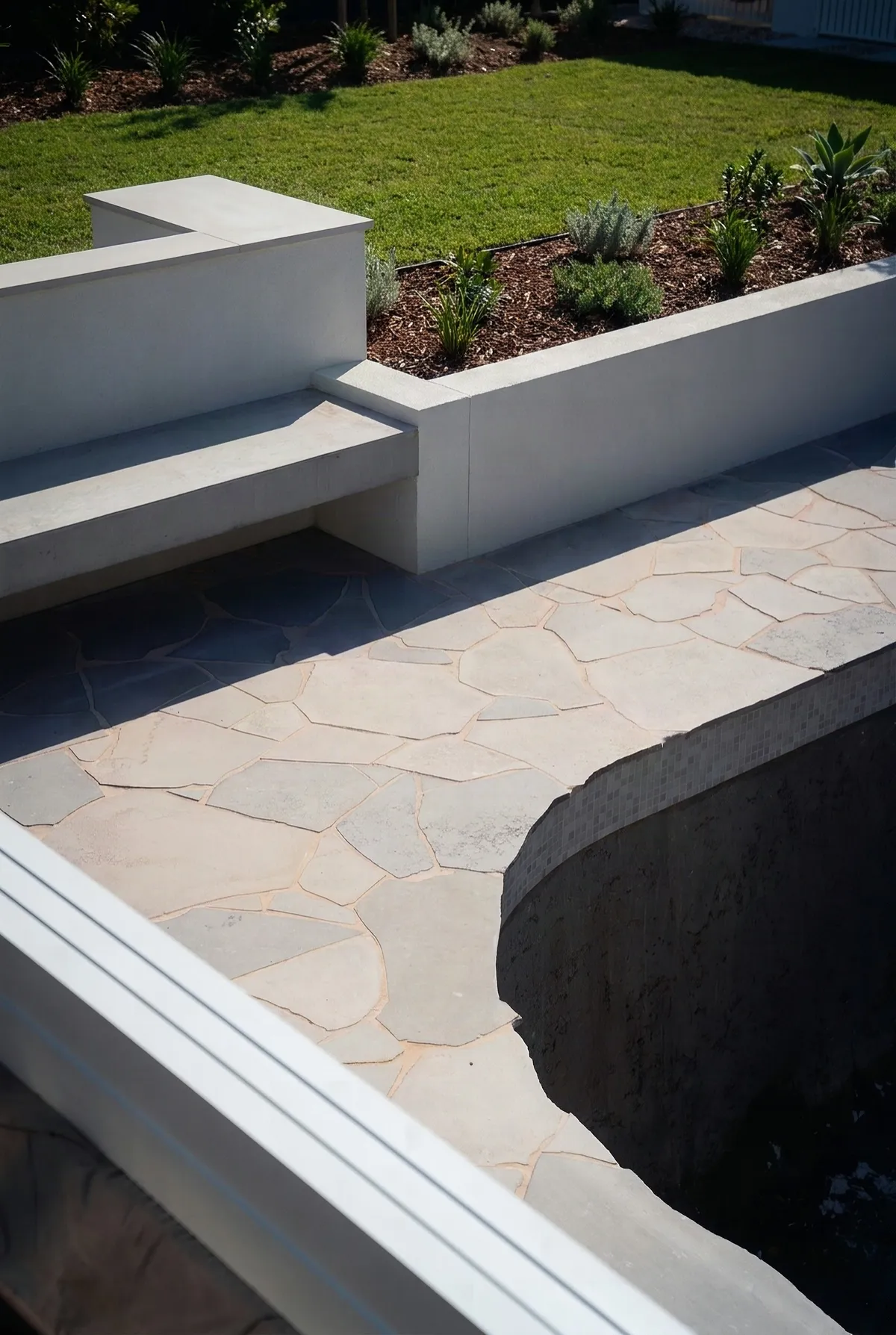
Coping is the stone or tile capping around the pool's edge. It frames the water, links the pool to the paving and is the surface you sit on.
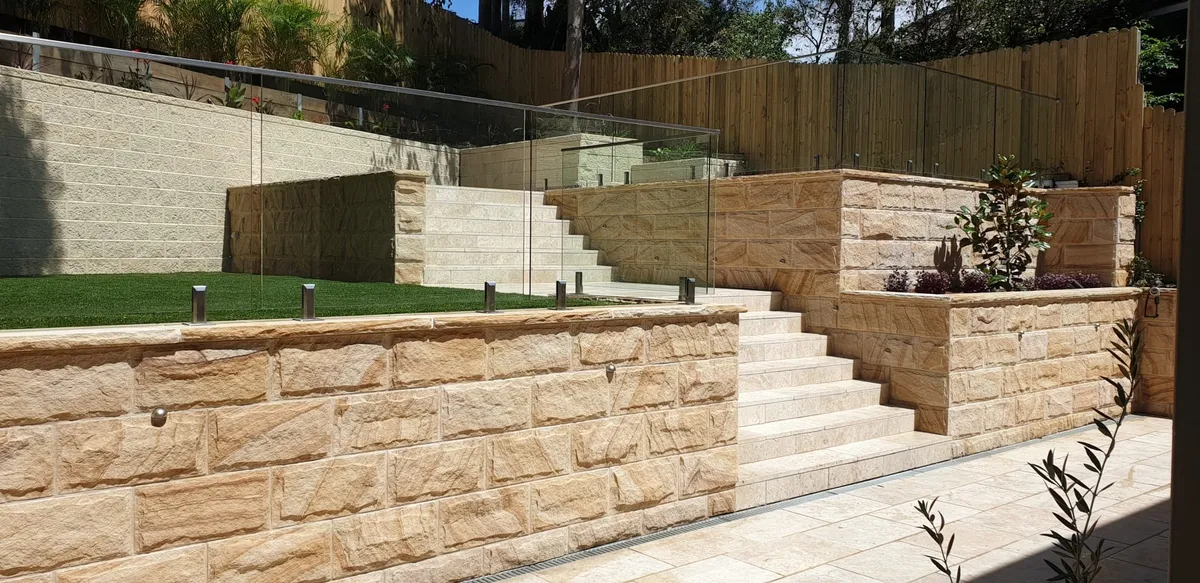
- Natural stone such as travertine, sandstone or granite, in bullnose, square or drop-face profiles.
- Porcelain for a consistent colour and low porosity, ideal for modern homes.
- Waterline tiles protect the band where scum and sunscreen collect, and add a fine line of colour or texture.
- Wet and infinity edges let the water spill over a weir into a hidden trough, so the surface appears to meet the view or the paving.
Whatever you choose, it must be slip-rated, comfortable in summer sun and sealed properly for salt air.
Features built into the shell
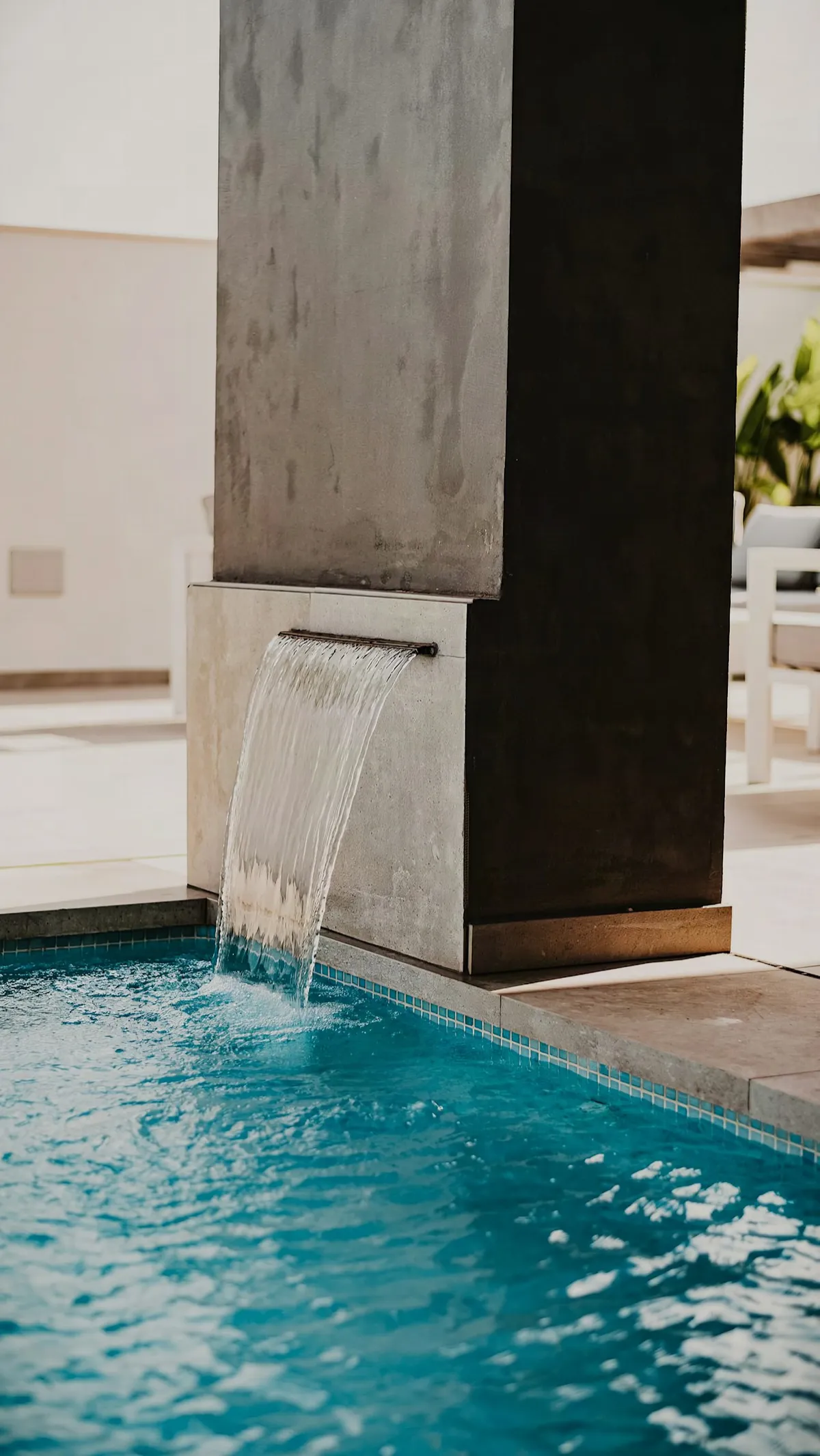
Because the shell is formed on site, features can be built in from the start: swim-outs and sun ledges, bench seats, spas with spillways, water features, and step layouts that double as seating. Planning them early costs less than adding them later.
Care and lifespan
- Balanced water chemistry protects every finish. Pebble and tiled surfaces are the most forgiving.
- Good circulation and regular brushing keep algae off textured surfaces.
- Stone coping needs resealing every few years on the coast.
- Tiled and pebble interiors, well built and well maintained, are long-term finishes measured in decades.
Planning your finishes
We bring samples to site so you can see them against your home, paving and planting in real light, then lock in the interior, coping and edges as one design. It's the simplest way to get a pool that looks considered rather than assembled.
Common questions
What is the best interior finish for a concrete pool?
Fully tiled is the most refined and durable; pebble is tough, textured and forgiving; polished aggregate sits in between with a smoother feel. The right choice depends on the look you want and your budget.
Which pool finish lasts the longest?
Fully tiled and quality pebble interiors are long-term finishes measured in decades when built and maintained well. Painted render needs recoating over time.
What coping is best around a pool?
Slip-rated natural stone or porcelain that stays comfortable in summer sun. Travertine, sandstone and porcelain are all popular on the Coast.
Can I add a wet edge or infinity edge?
Yes. With a concrete pool the weir and hidden trough are built into the shell, which suits sloping blocks with a view.
Planning something like this?
We'll walk the block with you and talk through ideas, timing and budget.
See our concrete pools work