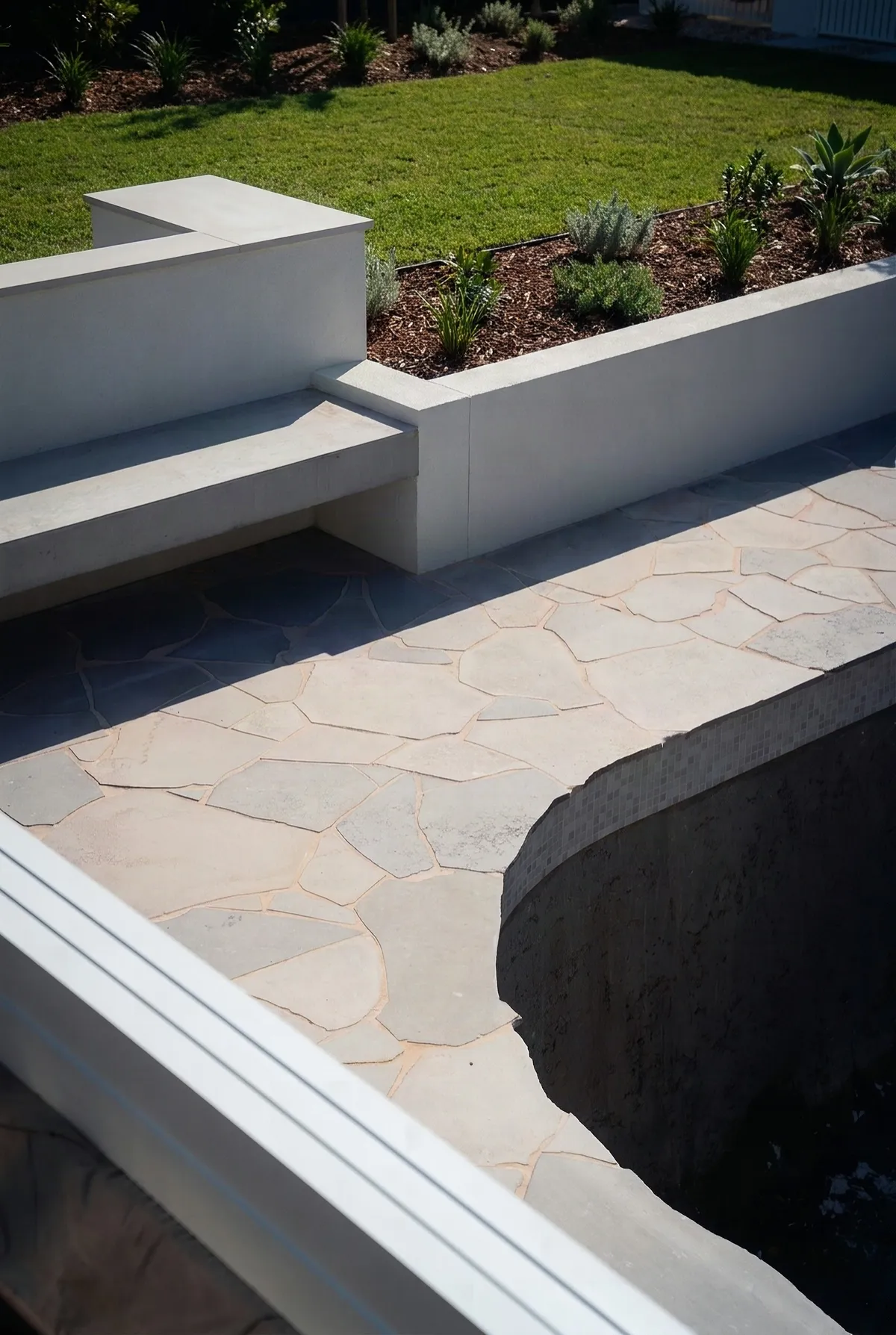
What paving and concrete cost in Australia
Use these as planning signals. Access, base preparation, drainage and edge restraints can nudge prices either way.
- Concrete pavers, installed
- $110 to $200 per m²
- Porcelain pavers or outdoor tiles, installed
- $130 to $250 per m²
- Natural stone: travertine, sandstone, granite
- $150 to $300 per m²
- Cobblestone setts on mortar
- $220 to $380 per m²
- Plain broom-finish concrete
- $90 to $140 per m²
- Exposed aggregate or coloured concrete
- $110 to $180 per m²
- Honed or polished exterior concrete, slip-rated
- $120 to $300 per m²
For reference, interior grind-and-seal polishing averages around $80 to $150 per m². Outdoor concrete needs slip-conscious finishes and premium sealers, which is why it costs more.
Heat underfoot and coastal durability
- Porcelain: excellent salt resistance and very low porosity. Choose light tones around pools; many outdoor slabs carry R11 or R12 slip ratings.
- Travertine: stays relatively cool in light tones. A tumbled, well-sealed finish handles coastal settings well.
- Sandstone: warm, coastal and textured. Needs a quality penetrating sealer and routine care to limit marking and salt efflorescence.
- Concrete pavers: reliable all-rounders. On the coast, specify dense products and seal high-splash areas.
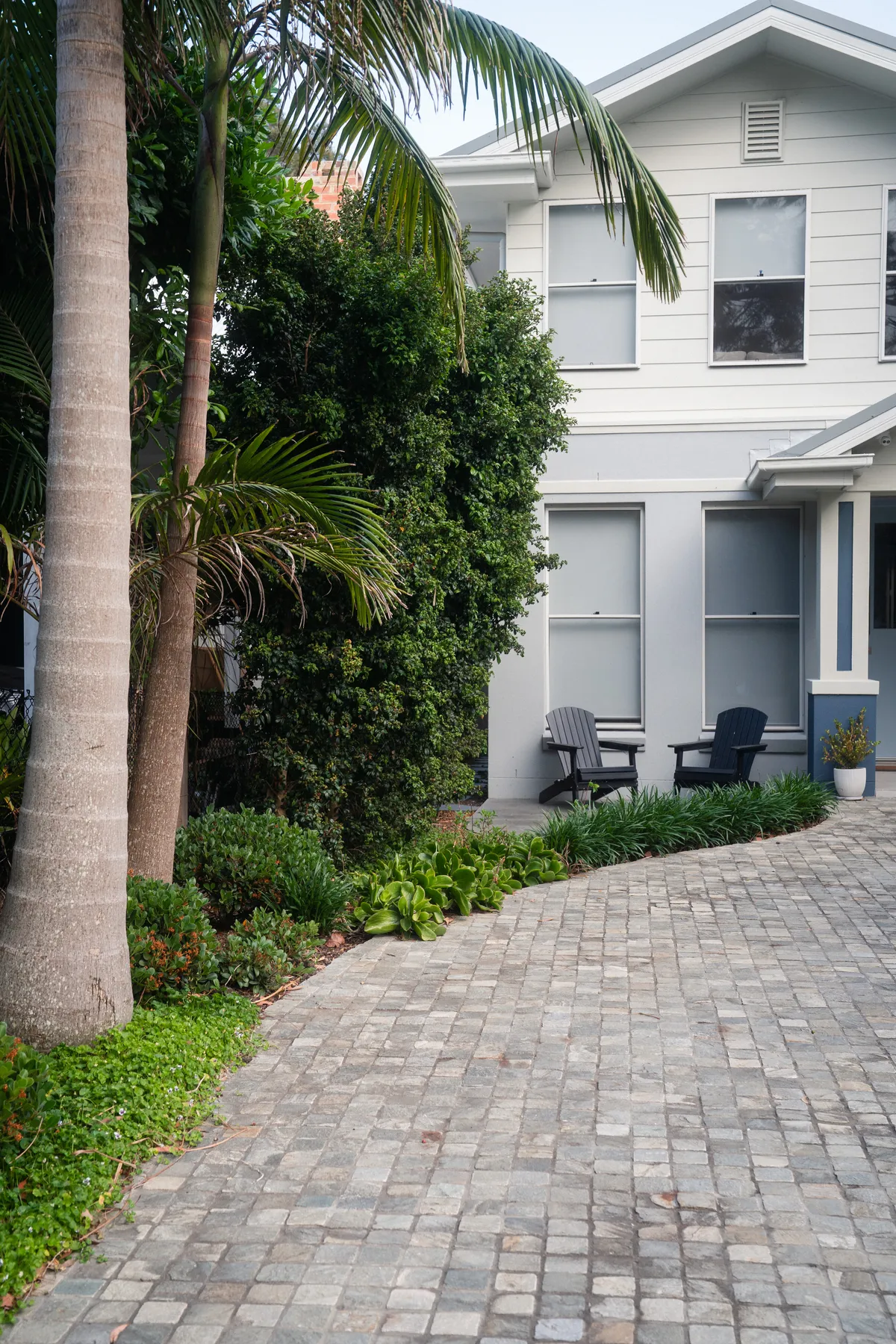
- Cobblestone: incredibly durable, naturally grippy and ideal for sloping driveways.
- Honed concrete: can warm up in dark mixes. Around pools, choose lighter mixes and a honed or grit-profiled surface.
Slip resistance when wet
Is polished concrete slippery when wet? High-gloss interior polishes are, so never use them outside. For wet areas, choose:
- Honed concrete with fine aggregate exposure and a penetrating, non-film sealer.
- Grit-additive sealers or slip-resistant densifiers on traffic zones and pool edges.
- Exposed aggregate, a proven traction finish for driveways and paths.
- Outdoor porcelain rated R11 or R12.
Around pools, favour split, sandblasted, tumbled or structured stone, and keep sealers up to date.
Maintenance and lifespan
Pavers and concrete can both last decades over a stable, well-drained base. The difference is in the upkeep.
- Pavers can be lifted and replaced individually. Joints need occasional sand and weed control, and resealing every few years.
- Concrete slabs have no joints to weed, but repairs to cracking are more involved.
- Porcelain is the easiest to clean; grout quality and falls matter.
- Natural stone needs breathable sealers and gentle cleaners in salt air.
- Cobblestone needs little beyond routine cleaning.
Driveways: pavers or concrete?
The downsides of a paver driveway are movement if the base is under-prepared, joint upkeep, and more labour for complex patterns. In return, pavers allow staged repairs and easy service access. Exposed aggregate goes in fast with crisp, continuous lines, but patching after service works is more visible.
Plain concrete is usually the cheapest. Compare decorative concrete with budget pavers and the gap narrows; premium stone and cobbles cost more than most concrete finishes.
There's no single best surface for a coastal home, only the best fit for your budget, your style and your site.
Design and coastal style
- Seamless modern: exposed aggregate or honed concrete for sleek paths and broad terraces.
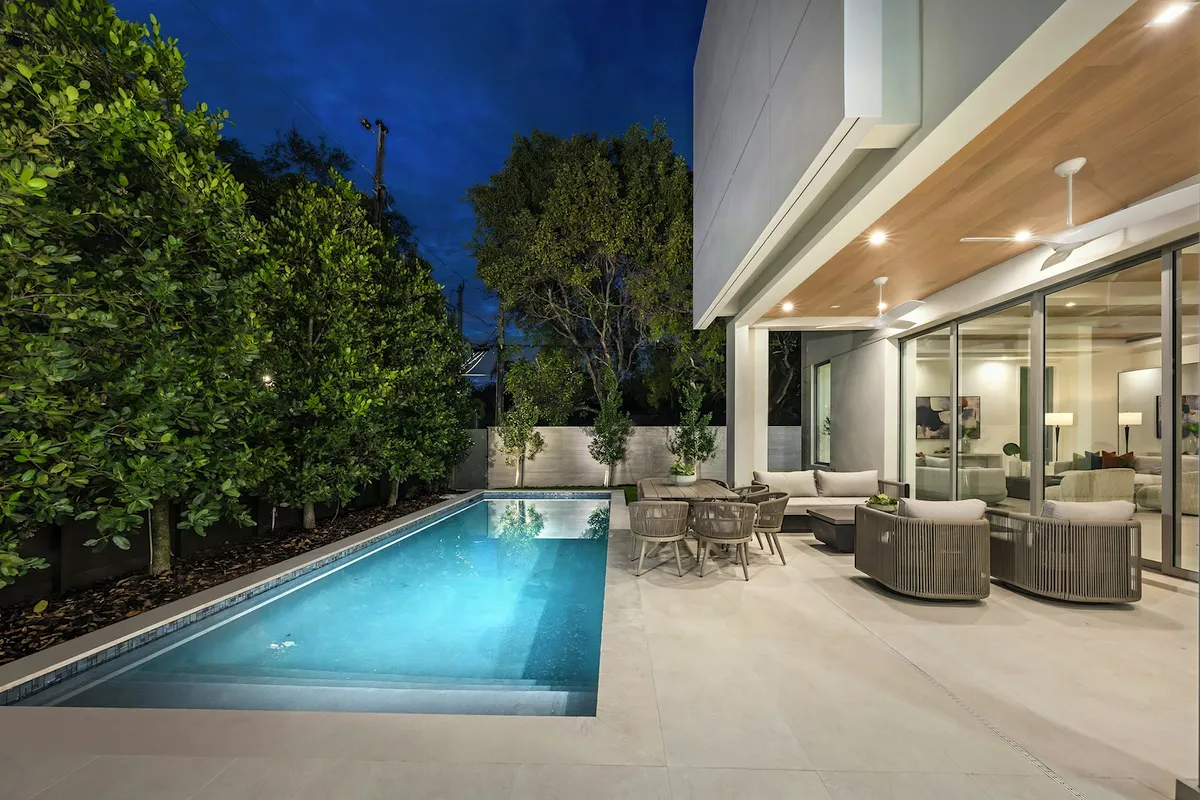
- Classic coastal: tumbled travertine, structured porcelain or hand-cut sandstone with timber and native planting.
- Statement entries: granite or bluestone cobbles in fans or rows.
- Mixed palettes: honed concrete for large areas with a stone border, or cobble bands to add grip on slopes.
Polishing an existing slab, and cheaper alternatives
An existing slab can often be honed if it's sound, reasonably flat and free of major cracking or coatings. We check moisture, hardness and aggregate exposure on site. Outside, a honed finish with a penetrating sealer beats high gloss. Where a slab isn't suitable, an overlay or a fresh pour is better.
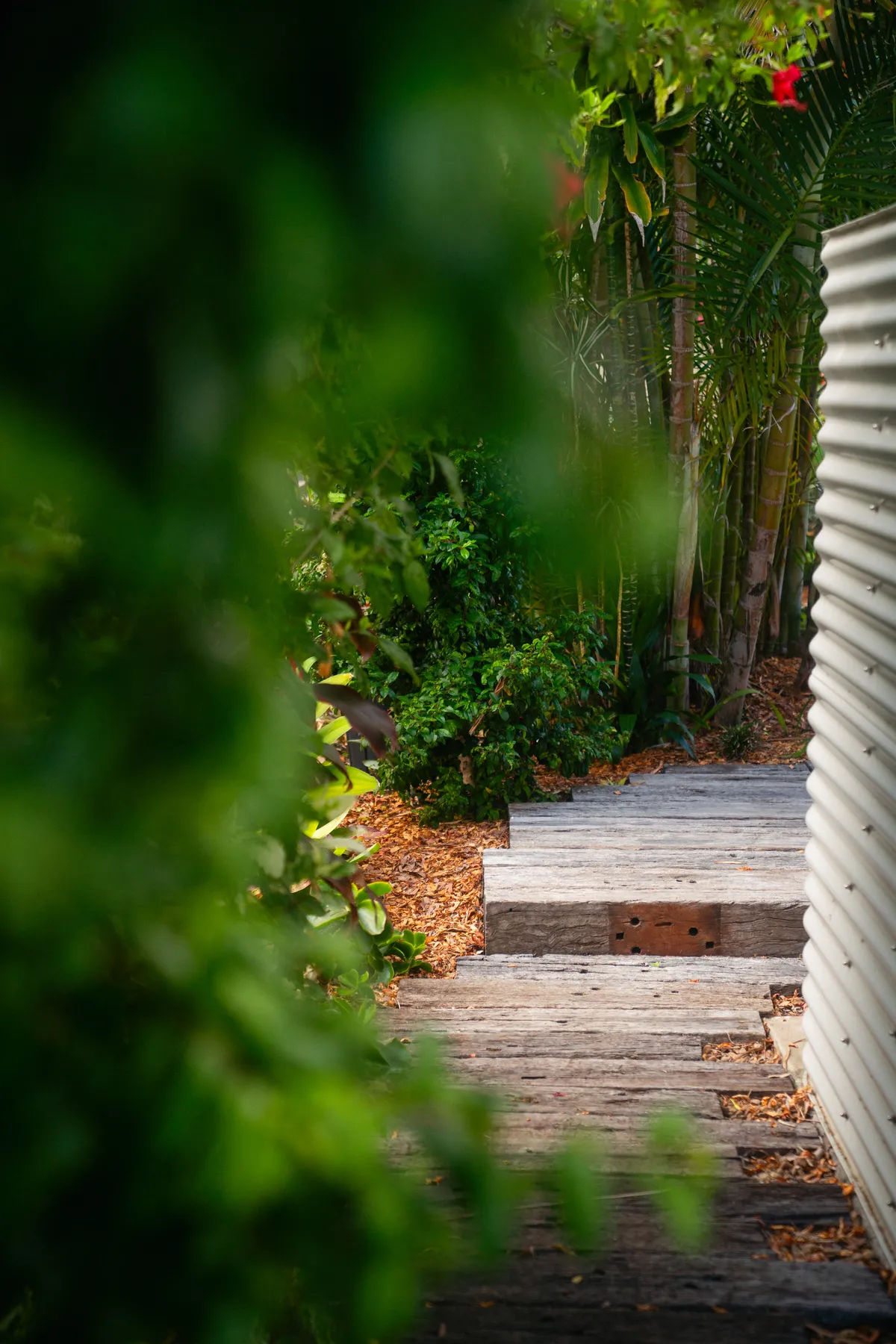
Cheaper alternatives to polished concrete include exposed aggregate, broom-finish concrete with a tinted sealer, and large-format pavers that give a slab-like look with easy repairs. For garden paths, stepping stones set in decomposed granite or stabilised gravel with steel edging look relaxed and cost less.
When paving wins, and when concrete wins
Choose paving for texture and pattern around pools and alfresco areas, where future service access is likely, or where slopes and curves need small-format flexibility. Choose concrete for seamless modern spans, fast installation, strong driveways with clean falls, and value over large areas.
Common questions
What is the cheapest paving material?
Plain concrete pavers or stepping stones laid on compacted road base usually have the lowest installed cost.
How much does polished concrete cost per m² outdoors?
Around $120 to $220 per m² for exterior grind and seal, and $180 to $300 per m² for higher-spec mechanical polishes with penetrating sealers.
Is polished concrete slippery when wet?
High-gloss polishes can be, so they're not for outdoor use. Choose honed concrete, exposed aggregate or slip-rated sealers for wet areas.
What lasts longer, pavers or concrete?
Both can last decades on a stable, well-drained base. Pavers are easier to repair; concrete has no joints to maintain.
Planning something like this?
We'll walk the block with you and talk through ideas, timing and budget.
See our paving, tiling & concrete work