What you can build in NSW, and where
In most NSW councils you can use a solid-fuel outdoor fireplace or fire pit for cooking or heating, as long as you don't create excessive smoke or nuisance, follow local fire restrictions, and respect bush fire danger periods. During a Total Fire Ban, all solid-fuel outdoor fires are prohibited. Gas and electric outdoor heaters are usually allowed year-round, used safely.
Clearances are crucial. As a practical baseline on most suburban blocks:
- Keep a fire pit at least 3 metres from buildings, fences and anything combustible, unless the manufacturer specifies otherwise.
- Avoid low pergolas and tree canopies. Allow at least 2 metres of vertical clearance, more if the manual asks for it.
- In bushfire-prone areas, use non-combustible surrounds such as stone or concrete, fit ember guards and keep mulch and fuel away from the fire zone.
Always check your council's website before you build. If in doubt, ask your installer to confirm compliance with Australian Standards, gas codes and any site-specific BAL requirements.
Gas or wood: choosing your fuel
- Wood gives the classic crackle, a natural flame and the smell of timber. You'll need dry, seasoned wood, a spark screen, ash removal and careful placement away from timber decks. On the coast, choose stainless or high-grade coatings to manage corrosion.
- Gas (bottled LPG or natural gas) is instant on and off, with little smoke and minimal cleanup. A licensed gasfitter connects and commissions it. Gas fire tables and burners pair beautifully with stone benches and low seating walls.
For a quick after-work fire without the cleanup, gas is hard to beat. If ceremony and aroma matter most, wood is still the soulful choice.

Built-in fireplaces or portable pits
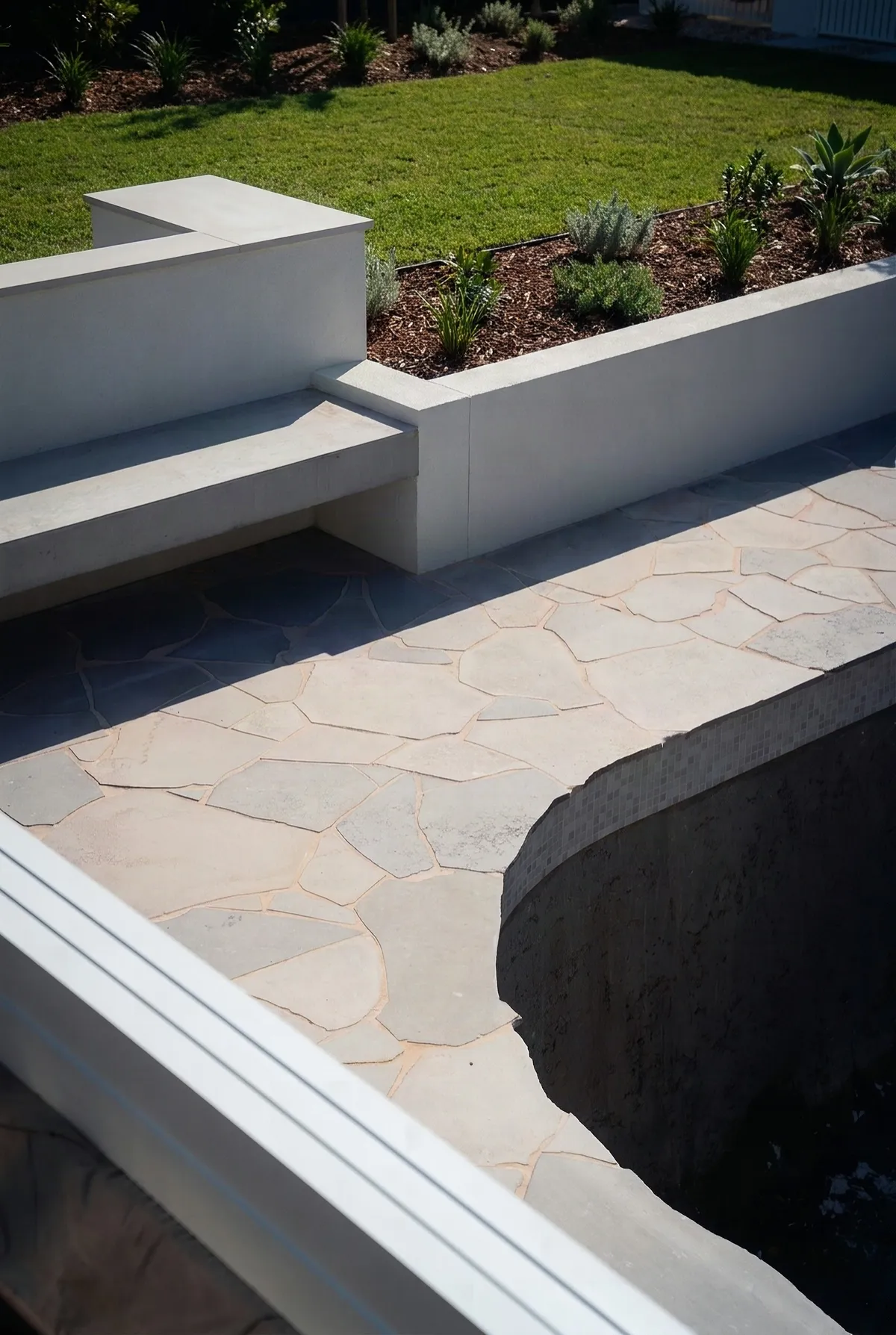
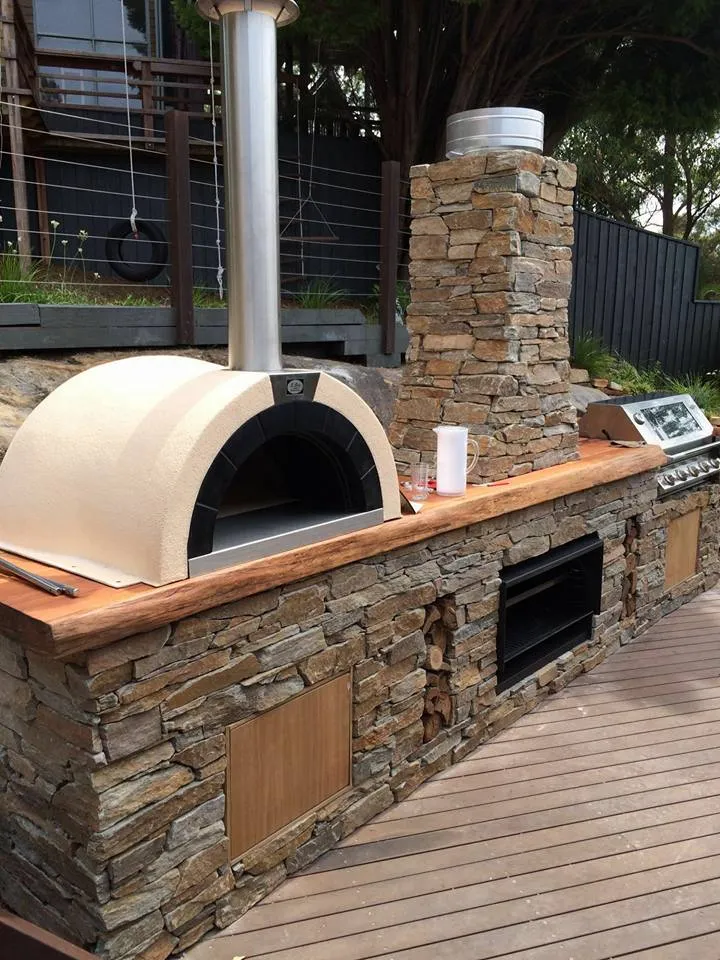
- Built-in masonry fireplaces are a permanent architectural feature, with a chimney or wind wing that suits breezy coastal sites. Build them as a sandstone feature wall or a rendered block core wrapped in stone cladding, with wood niches, integrated lighting and a raised hearth that doubles as seating.
- Freestanding or portable pits are quick, budget-friendly and easy to move. Choose one with a spark screen and a stable base, set on a non-combustible pad of stone or concrete.
A hybrid works well too: a fixed sandstone plinth with a removable fire bowl, permanent in the landscape but flexible over time.
Coastal design ideas in sandstone and stone
Sandstone feels at home in Copacabana, Terrigal, Avoca and the Northern Beaches.
- A low circular pit in hand-split sandstone with a 1.5 to 2 metre seating ring, set into slip-rated stone paving.
- A linear fireplace in dimension sandstone with a honed capping stone, recessed LED lighting and a sheltered niche for a gas insert.
- Pale stone cladding over a block core, with hardwood benches and a hardy seaside palette of Lomandra, Westringia and Banksia.
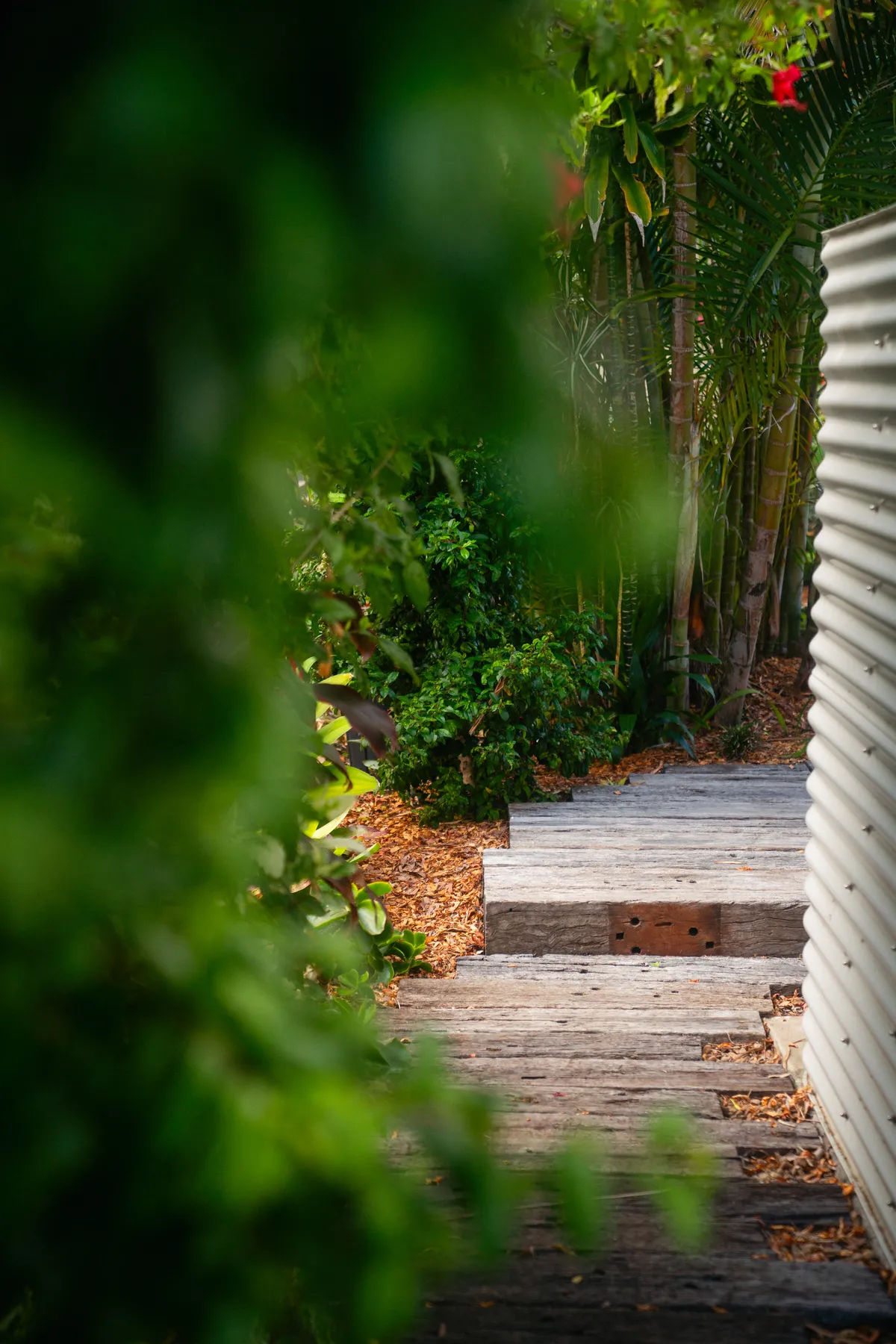
Build in drainage so rain doesn't pool around the fire area. On sloping sites, sandstone ledger steps can lead down to a sheltered terrace.
Fire features near decks and paving
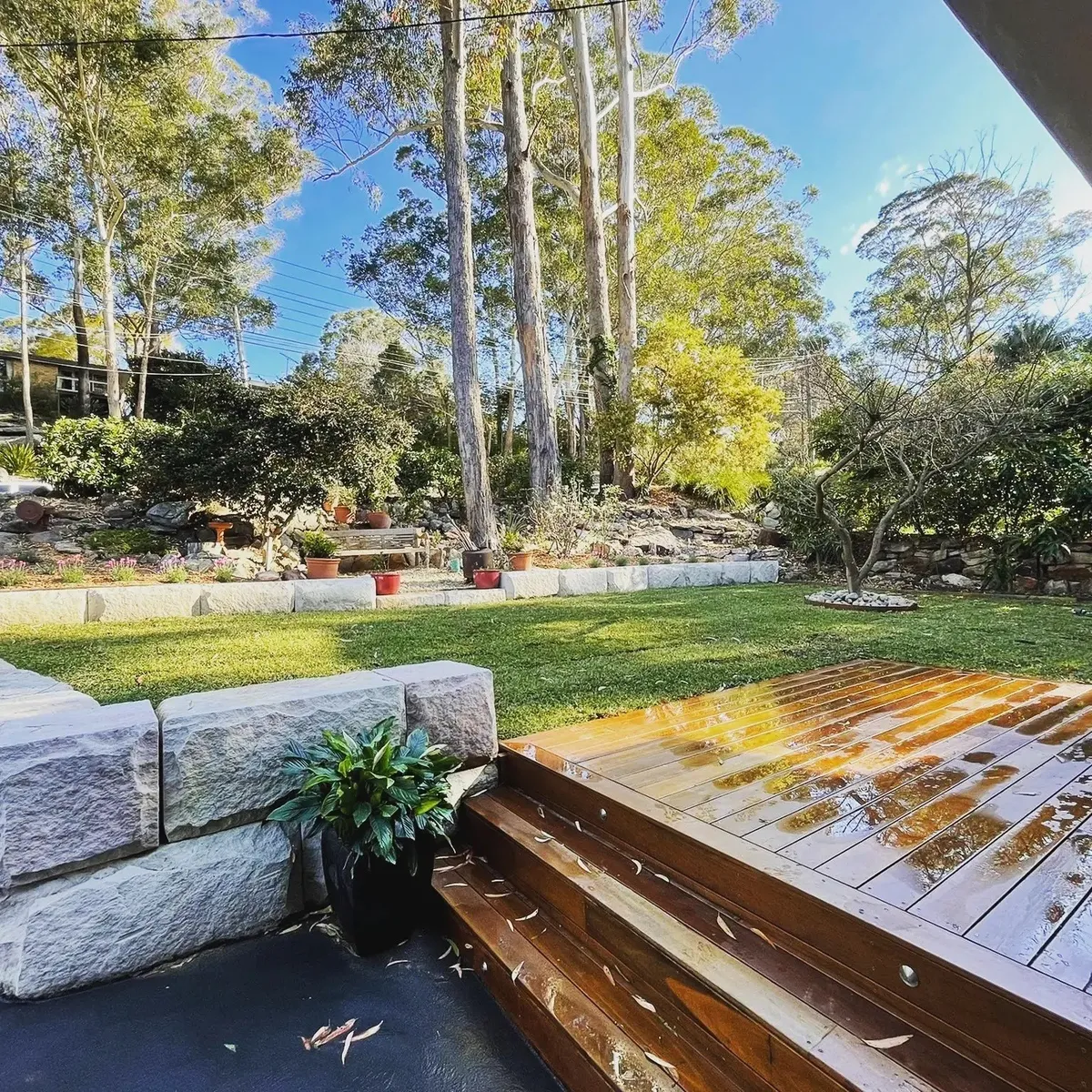
- Never put a wood fire pit directly on timber or composite decking. Use a purpose-built stand with a non-combustible hearth pad, or set the pit on stone paving off the deck.
- Keep the deck clear of debris, fix loose fasteners and oil hardwoods regularly.
- Use slip-rated stone or porcelain around the fire zone and avoid high-gloss concrete. If you want concrete, specify a honed, slip-rated finish.
Plan the deck and the fire area together and you get tidy transitions and one consistent material story.
Costs, timelines and who does the work
- Portable steel or cast fire pit
- $300 to $2,500
- Paved pad and seating for a portable pit
- $1,500 to $6,000
- Built-in masonry fireplace, stone clad
- $8,000 to $25,000+
- Complex sites, chimneys, premium sandstone, gas
- $18,000 to $45,000+
- Gas fire table or built-in burner
- from $3,500 to $8,000
Most NSW clients land between $12,000 and $30,000 for a complete built-in outdoor fireplace with quality stonework and a properly prepared terrace. Site access, engineering and premium stone push it higher.
A fire pit with a paved pad usually takes 1 to 3 weeks from design sign-off. A built-in masonry fireplace takes 3 to 6 weeks including footings, blockwork, cladding, services and curing. A landscape contractor handles design, foundations, drainage and stonework; licensed gasfitters and electricians connect the services. We coordinate the whole process.
Placement and safety tips
- Distance: keep a wood fire pit at least 3 metres from structures, and check the product's own clearances.
- Surround: a non-combustible zone at least 1 metre around the fire, with gravel or stone instead of loose mulch.
- Wind: orient a fireplace so its chimney or wind wing shelters the seating, or add a glass wind guard to a gas table.
- Kit: an ash bin, tongs, a screen and a hose or extinguisher within reach. Store gas bottles upright and ventilated.
Are outdoor fire features worth it?
If you love to entertain, or just want somewhere to unwind after a swim, they're one of the best enjoyment-for-cost upgrades outside. You gain a natural gathering point, warmth in the shoulder seasons and a signature feature that ties the garden together.
Common questions
How much does an outdoor fireplace cost in NSW?
Most built-in outdoor fireplaces with quality stonework land between $12,000 and $30,000. Portable pits start from a few hundred dollars, plus a paved pad.
How far should a fire pit be from the house?
At least 3 metres from buildings, fences and anything combustible, with 2 metres or more of clearance overhead, unless the manufacturer specifies more.
Can I have a fire pit during a Total Fire Ban?
No. All solid-fuel outdoor fires are prohibited during a Total Fire Ban.
How long does it take to build an outdoor fireplace?
A fire pit with a paved pad takes 1 to 3 weeks; a built-in masonry fireplace usually 3 to 6 weeks.
Does an outdoor fireplace add value?
A well designed, compliant fire feature with quality paving, seating and lighting extends your living space and lifts a home's appeal.
Planning something like this?
We'll walk the block with you and talk through ideas, timing and budget.
See our firepits & outdoor kitchens work