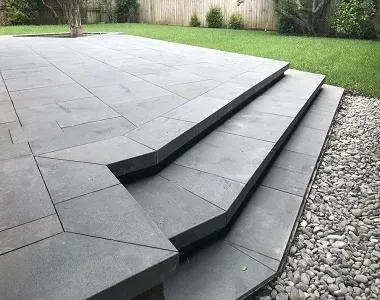
Outdoor Paving And Polished Concrete: Costs, Finishes, And Slip-Safe Choices For Coastal Homes

Blog: January 2026
Outdoor Paving And Polished Concrete: Costs, Finishes, And Slip-Safe Choices For Coastal Homes

Coastal homes ask a lot of their outdoor surfaces. Salt, wind, summer heat and sudden downpours push driveways, paths and pool surrounds to their limits. If you are weighing up paving versus polished concrete, the smartest choice balances cost, durability, slip resistance when wet and day-to-day upkeep. Below is a practical guide tailored for Australian conditions, with current per‐square‐metre price bands, finish options and when each material makes sense.
Quick cost guide in Australia
Use these ranges as planning signals. Site access, base prep, drainage and edge restraints can nudge prices up or down.
Concrete pavers: $45–$120 per m2 for materials, $110–$200 per m2 installed depending on format and substrate prep.
Porcelain pavers or outdoor tiles: $60–$140 per m2 for materials, $130–$250 per m2 installed due to adhesive systems, cuts and falls.
Natural stone paving, travertine, sandstone, granite: $70–$160 per m2 for materials, $150–$300 per m2 installed depending on thickness, pattern and sealing.
Cobblestone setts, granite or bluestone on mortar: $120–$220 per m2 for materials, $220–$380 per m2 installed because of labour intensity.
Plain broom-finish concrete slab, exterior: $90–$140 per m2 installed.
Exposed aggregate or coloured concrete: $110–$180 per m2 installed.
Honed or mechanically polished exterior concrete, slip-rated: commonly $120–$220 per m2 for grind and seal, $180–$300 per m2 for higher-spec mechanical polish systems and penetrating sealers.
Interior decorative polish reference, for planning: the average cost to polish concrete sits around $80–$150 per m2 for grind and seal; deeper mechanical polishes run higher. Exterior work requires slip-conscious finishes and premium sealers.
These figures answer, what does paving cost per m2? and how much does paving cost per m2 in Australia?, while framing how much does polished concrete cost per m2? in typical NSW scenarios.
Heat underfoot and coastal durability
Porcelain: excellent salt resistance and very low porosity. Choose a light colour to reduce heat pickup around pools. Many outdoor-rated slabs carry R11 or R12 slip ratings for wet areas.
Travertine: stays comparatively cool underfoot in light tones. A textured, tumbled finish with correct sealing handles coastal settings well.
Sandstone: warm, coastal look and good texture. Needs quality penetrating sealer and routine maintenance to minimise marking or salt efflorescence.
Concrete pavers: solid all-rounders with wide colours and sizes. In coastal zones, specify dense products and seal high-traffic, high-splash areas.
Cobblestone: incredibly durable. The textured split face is naturally grippy and ideal for driveways on slopes. Heat varies by stone colour.
Polished or honed concrete: the slab can warm up in darker exposures. For pool surrounds or sun-baked courtyards, opt for lighter mixes or integral light oxides and choose a honed or grit-profiled surface to retain grip.

Slip resistance when wet
Is polished concrete slippery when wet? It depends on finish. High-gloss interior polishes are not suited to wet exteriors. For outside, aim for:
Honed concrete with a fine aggregate exposure, sealed with a penetrating, non-film forming product.
Grit-additive sealers or slip-resistant densifiers for traffic zones and pool edges.
Exposed aggregate, a proven traction finish for driveways and paths.
Outdoor porcelain tiles or pavers with an R11 or R12 rating.
Pavers in textured stone, cobblestone and porcelain grip reliably in rain. Around pools, favour split, sandblasted, tumbled or structured surfaces and maintain sealers as recommended.
Maintenance and lifespan
What lasts longer, pavers or concrete? Both can deliver decades if installed over a stable base with drainage. Differences show up in maintenance:
Pavers: individual units can be lifted and replaced, a win for services and localised repairs. Joints need occasional sand topping and weed control. Sealing every few years stabilises colour and reduces staining.
Concrete slab: no joints to weed; periodic resealing keeps stains out. If cracking occurs, repair is more involved than swapping a paver, which feeds into the downside of a paver driveway? and slab trade-offs below.
Porcelain: lowest porosity and simplest cleaning. Grout quality and falls matter.
Natural stone: needs breathable penetrating sealers and gentle cleaners to preserve patina in salt air.
Cobblestone: minimal maintenance beyond routine cleaning; built to last.
Driveway performance and the “downside” question
What is the downside of a paver driveway? Three themes:
Movement if the base is under-prepared; heavy vehicle traffic requires proper excavation, compaction and edge restraints.
Joint upkeep; polymeric sand reduces weeds but still needs periodic attention.
Upfront labour; complex patterns and cuts increase install time.
On the flip side, pavers allow staged repairs, utility access and design flexibility in ways a slab cannot. Exposed aggregate concrete offers fast installation and crisp, continuous lines, but if you need to open the driveway later for services, reinstatement is more visible.
Is paving cheaper than concrete? Plain concrete is generally the entry-price winner. Once you compare exposed aggregate or decorative finishes to budget pavers, the gap narrows. Premium natural stone or cobblestone will cost more than most concrete finishes.
Design aesthetics and coastal style
Seamless modern: exposed aggregate or honed concrete delivers sleek paths and broad terraces with consistent tone, perfect for contemporary architecture.
Classic coastal: tumbled travertine, structured porcelain or hand-cut sandstone provide texture and warmth that pairs with timber and native plantings.
Heritage or statement entries: granite or bluestone cobbles in fans or rows create timeless driveways with high traction and visual richness.
Mixed palettes: combine honed concrete for large areas with a stone or porcelain border for detail, or use cobble bands to manage slopes and add grip at garage thresholds.
Polished concrete, new and existing slabs
Can you do polished concrete on an existing slab? Often yes, provided the slab is structurally sound, relatively flat and free of significant cracking or coatings that cannot be removed. A site inspection checks moisture,
hardness and aggregate exposure potential. For outdoor zones, a honed finish with a penetrating sealer is preferred over high-gloss polishes. Where a slab is unsuitable, overlay systems or a fresh pour are better.
What is a cheaper alternative to polished concrete? Consider:
Exposed aggregate concrete, strong traction and decorative stone reveal.
Broom-finish or light stipple concrete with a tinted sealer.
Large-format concrete pavers laid on a stabilised base for a slab-like look with repair flexibility.

Budget-friendly pathway ideas
Concrete broom finish with neat saw cuts, the most economical continuous surface.
Stepping stones, precast or cut stone, set through compacted decomposed granite or gravel to reduce materials and labour.
Stabilised gravel with steel edging for garden paths, a relaxed aesthetic at low cost.
Mix porcelain or concrete steppers with groundcovers to soften heat and reduce hardscape area.
When paving beats concrete, and when concrete wins
Choose paving when:
You want rich texture, pattern or a coastal stone look around pools and alfresco zones.
Future access to services is likely, and replaceable units save headaches.
Slopes or curves need small-format flexibility or cobble-level traction.
Choose concrete when:
You prefer seamless spans for modern designs and quick installation.
You need strong performance on driveways with clean falls and integrated drainage.
Budget prioritises value on large areas, especially with broom or exposed aggregate finishes.
Frequently asked questions, answered clearly
What is the cheapest paving material? Plain concrete pavers or stepping stones laid on compacted road base typically land at the lowest installed cost among paved options.
What is the average cost to polish concrete? For interiors, common averages sit around $80–$150 per m2 for grind and seal in Australia; exterior slip-safe hone and seal or higher-spec mechanical systems in outdoor zones commonly run $120–$300 per m2 depending on specification.
Is polished concrete slippery when wet? High-gloss interior polishes can be, so do not use them outdoors. Specify honed concrete, exposed aggregate or slip-rated sealers for wet areas.
How much does polished concrete cost per m2? Expect about $120–$220 per m2 for exterior grind and seal and $180–$300 per m2 for higher-spec mechanical polishes with penetrating sealers in outdoor applications.
Work with a coastal specialist
At Key Landscaping, we design and build driveways, paths and pool surrounds that look refined and perform in salt air. Our team supplies and installs porcelain and natural stone, cobblestones, concrete pavers and polished or honed concrete with the right drainage, falls and slip rating for your site. If you are planning a pool terrace or driveway upgrade, our end-to-end approach, from design to installation, keeps schedules predictable and finishes consistent.
Explore our paving capability and request a measure and quote: see paving central coast. Planning a tiled pool surround or alfresco floor with structured porcelain? Our team also delivers precise set-out and falls across tiling central coast. Considering a sleek honed or decorative concrete finish? Review polished concrete central coast for options and guidance.
Summary
For coastal homes, there is no single best surface; there is a best fit for your budget, aesthetic and site conditions. Plain concrete is the cost leader for large areas, exposed aggregate brings traction and texture, porcelain and travertine keep feet cool and resist salt, and cobblestone outperforms on steep, high-wear driveways. Pavers shine where you want pattern and easy repairs; concrete wins when you prefer seamless spans and speed.
Keep slip resistance at the top of your specification, choose lighter tones for sun-exposed areas and invest in proper base prep and sealing. When you are ready to compare samples on site and lock in the right finish, the Key Landscaping team will guide you from concept to completion with craftsmanship that lasts.
