Cosy Summer Nights: Designing Outdoor Fireplaces And Fire Pits For NSW Homes

Blog: February 2026
Cosy Summer Nights: Designing Outdoor Fireplaces And Fire Pits For NSW Homes

There is something special about gathering outside as the sun drops, a soft breeze off the coast, and a gentle crackle of flames as the focal point. An outdoor fireplace or fire pit turns a patio into a destination in every season, extending your entertaining hours and creating a natural hub for friends and family. If you live in Sydney or on the Central Coast, the good news is you can design a compliant, beautiful, and low‑maintenance feature that suits your block, your lifestyle, and your budget.
This guide walks you through NSW rules, clearances, gas versus wood fuel, built‑in masonry fireplaces versus portable pits, timelines, costs, safety around decking and paving, and the value impact. You will also find design ideas that lean into sandstone and stone cladding for a coastal look that feels timeless.
What you can build in NSW, and where
In most NSW councils, you can use a solid‑fuel outdoor fireplace or fire pit for cooking or heating, provided you do not create excessive smoke or nuisance, you follow local fire restrictions, and you comply with bush fire danger periods and Total Fire Bans. During a Total Fire Ban, all solid‑fuel outdoor fires are prohibited. Gas and electric outdoor heaters are typically allowed year‑round, subject to safe use.
Clearances are crucial. As a practical baseline for many suburban blocks:
Keep a fire pit at least 3 metres from buildings, fences, and combustible materials, unless a manufacturer specifies otherwise.
Avoid positioning under low pergolas or tree canopies. Allow a vertical clearance of at least 2 metres to overhead branches, and more if your unit’s manual calls for it.
In bushfire‑prone areas, use non‑combustible surrounds such as stone paving or concrete, fit ember guards where appropriate, and keep fuels and mulch away from the fire zone.
Always check your local council website before you build, and follow the manufacturer’s instructions for clearances and spark protection. If in doubt, ask your installer to confirm compliance with Australian Standards, gas codes, and any site‑specific BAL requirements.
Gas versus wood, how to choose your fuel
Both fuels deliver ambience, but the experience and maintenance differ.
Wood burning: classic crackle, a natural flame pattern, and the smell of timber. You will need dry, seasoned wood, a spark screen or integrated ember management, ash removal, and careful placement away from timber decks. In coastal zones, consider stainless or high‑grade coatings to manage corrosion.
Gas (bottled LPG or natural gas): instant on and off, low smoke, and minimal cleanup. You will need a licensed gasfitter for connection and commissioning. Gas fire tables and built‑in burners pair beautifully with stone benches and low seating walls.
If you live in a smoke‑sensitive pocket, or you want a quick after‑work fire without the cleanup, gas is hard to beat. If ceremony and aroma matter most to you, wood remains the soulful choice.

Built‑in masonry fireplaces versus portable pits
Built‑in masonry fireplaces: a permanent architectural element with chimney or wind‑shielding, excellent for breezy coastal sites and for framing an outdoor room. These work well as a feature wall in handcrafted sandstone, or with a rendered block core wrapped in stone cladding. Add wood storage niches, integrated lighting, and a raised hearth that doubles as casual seating.
Freestanding or portable fire pits: fast to set up, budget friendly, and easy to move or store. Choose a model with a spark screen and a stable base. Pair with a non‑combustible pad of stone or concrete.
A hybrid approach also works, such as a fixed plinth in sandstone with a removable fire bowl. This gives you permanence in the landscape and flexibility over time.
Coastal design ideas with sandstone and stone cladding
Sandstone feels right at home in Copacabana, Terrigal, Avoca, and the Northern Beaches. Consider these combinations:
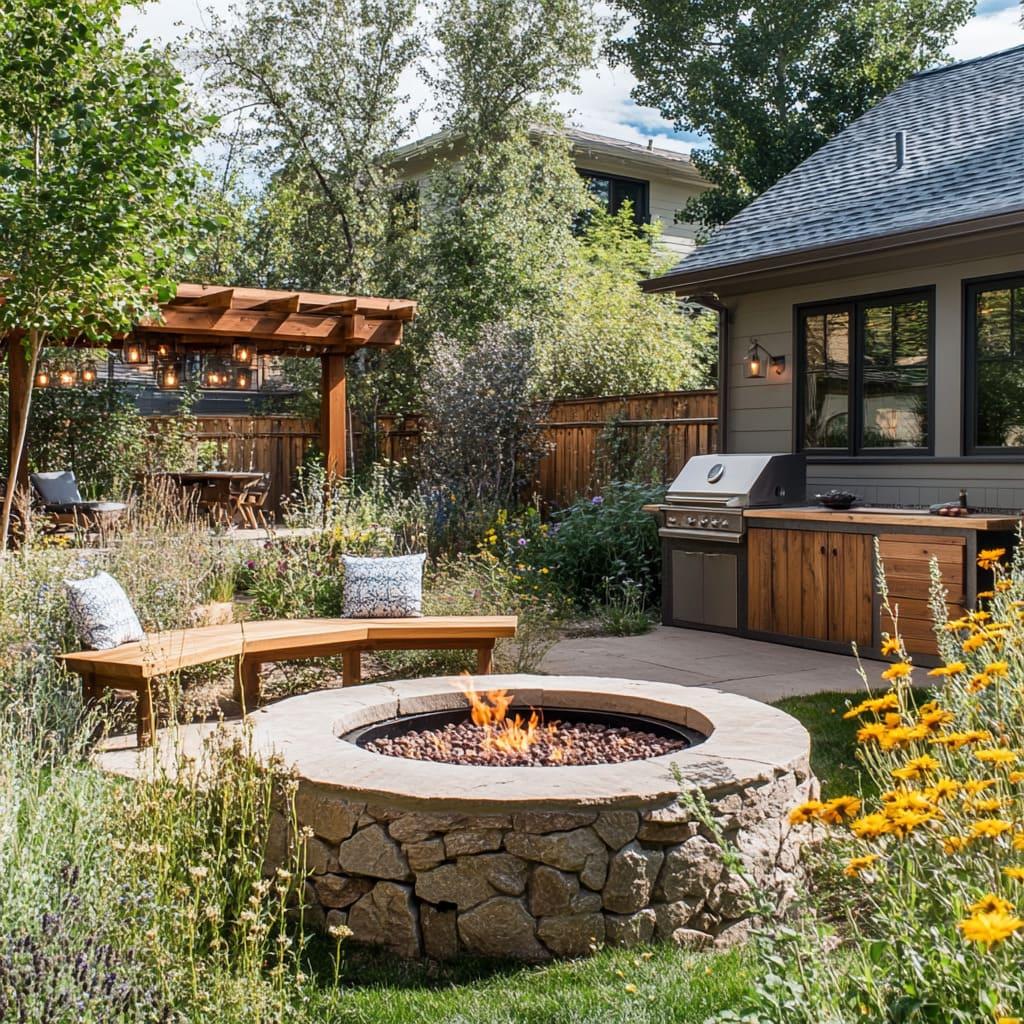
A low circular pit in hand‑split sandstone with a 1.5 to 2 metre diameter seating ring, set into slip‑rated stone paving for a level, ember‑safe zone.
A linear outdoor fireplace built from dimension sandstone blocks with a honed capping stone, recessed LED strip lighting, and a sheltered niche for a gas fire insert.
Coastal white or pale‑grey stone cladding over a blockwork core, paired with timber benches in durable hardwood, then softened with Lomandra, Westringia, and Banksia for a hardy, seaside palette.
Integrate drainage so rain does not pond around the fire area. On sloping sites, subtle retaining with sandstone ledger steps guides you down to a protected terrace.
Safety on decking and paving
You can enjoy a fire feature near decks with sensible detailing:
Do not place wood fire pits directly on timber or composite decking. Use a purpose‑built stand plus a non‑combustible hearth pad, or situate the pit off the deck on stone paving instead.
Maintain your deck by clearing debris between boards, fixing loose fasteners, and oiling hardwoods regularly. For a robust solution near fire features, many clients choose a paved terrace linked to the deck with a short flight of ledger steps.
Choose slip‑rated stone or porcelain pavers around the fire zone, and avoid high‑gloss concrete finishes. Where polished concrete is used, specify a honed, slip‑rated system.
If you are planning a deck and fire area together, coordinate both at once for tidy transitions and a consistent material story. If you need help with decking options that work with fire features, speak with our team of specialists or explore a trusted local partner for a deck builder central coast.
Costs, timelines, and who does the work
Every project is site led, but these ballparks will help you plan:
Portable fire pits: quality steel or cast models commonly range from $300 to $2,500. Add $1,500 to $6,000 for a simple paved pad and seating area, depending on size and stone choice.
Built‑in masonry fireplaces: expect from $8,000 to $25,000+ for a blockwork core with stone cladding, hearth, and seating details. Larger chimney elements, premium sandstone, storage niches, integrated lighting, and gas burners can lift the range to $18,000 to $45,000+ on complex sites.
Gas fire tables or built‑in gas burners: the burner kit and enclosure can start around $3,500 to $8,000, rising with stonework, bench length, and custom detailing. Allow for licensed gasfitting and compliance.
What is the average cost of installing a fireplace, and how much does it cost to install a fireplace in Australia? For outdoor, masonry‑style features, most NSW clients land between $12,000 and $30,000 for a complete, built‑in solution with quality stonework and a properly prepared terrace. Site access, engineering, and premium stone will push higher.
Who would install a fireplace? You will typically work with a specialist landscape contractor for design, foundations, drainage, and stonework. Licensed gasfitters connect and commission gas appliances, and electricians handle lighting and power. At Key Landscaping, we coordinate the entire process so your approvals, trades, and finishes align.
How long does it take to install a fireplace? From design sign‑off to handover, simpler fire pits with a paved pad can be completed within 1 to 3 weeks, depending on material lead times and weather. Built‑in masonry fireplaces usually take 3 to 6 weeks including footing works, blockwork, stone cladding, services, and curing time, with longer lead times on custom stone or complex detailing.
Can you put a fireplace in an existing home in Australia? Absolutely. Outdoor additions are often added to established homes. The keys are access planning, compliant clearances, and aligning the design with existing paving, decks, and levels.
What is the cheapest fireplace to install? Portable steel fire bowls or compact prefabricated pits are generally the most budget friendly. Gas table units can also be economical if you already have a nearby gas line and minimal stonework.
Does a fireplace add value to a home in Australia? A well designed, compliant outdoor fireplace or fire pit typically boosts appeal, extends living space, and can increase perceived value, especially when paired with quality paving, seating, and lighting. The best returns come from timeless materials and neat, low‑maintenance detailing.
Practical placement and clearance tips
Distance from home: keep a wood fire pit at least 3 metres from structures. Double check the product manual for specific clearances.
Base and surround: build a non‑combustible zone at least 1 metre around the fire edge using stone or concrete. Avoid loose mulch in this radius. Replace with gravel or stone where needed.
Wind management: on breezy coastal lots, orient a fireplace so the chimney or wind wing shelters the seating side. Consider a slightly taller back wall or glass wind guard for gas tables.
Storage and tools: add a discreet bin for ash, tongs, a screen, and a hose or fire extinguisher within easy reach. For gas, store bottles upright in ventilated spaces per code.What is the downside of a paver driveway? Three themes:
Movement if the base is under-prepared; heavy vehicle traffic requires proper excavation, compaction and edge restraints.
Joint upkeep; polymeric sand reduces weeds but still needs periodic attention.
Upfront labour; complex patterns and cuts increase install time.
On the flip side, pavers allow staged repairs, utility access and design flexibility in ways a slab cannot. Exposed aggregate concrete offers fast installation and crisp, continuous lines, but if you need to open the driveway later for services, reinstatement is more visible.
Is paving cheaper than concrete? Plain concrete is generally the entry-price winner. Once you compare exposed aggregate or decorative finishes to budget pavers, the gap narrows. Premium natural stone or cobblestone will cost more than most concrete finishes.
Are outdoor fire pits worth it?
If you love to entertain or simply want a place to unwind after a swim or surf, they are one of the highest enjoyment‑to‑cost upgrades you can make outside. You gain an anchor point for conversation, warmth on shoulder seasons, and a signature feature that ties your landscape together. Choose durable materials, plan safe clearances, and you will use it far more than you expect.
Why partner with Key Landscaping
Based in Copacabana and working across Sydney and the Central Coast, our team excels in stone masonry, sandstone detailing, and integrated outdoor living. We handle design, approvals guidance, foundations, drainage, gas and electrical coordination, and handcrafted finishes. If you want a designer outdoor fireplace in north Avoca or a custom fire pit terrace that complements your pool and paving, we deliver a seamless experience backed by attentive communication and tidy site management.
Ready to design a fire feature that suits your home, your microclimate, and your lifestyle? Speak with our landscaper central coast team to book a site visit, or ask us about fireplace installation central coast to explore design options, stone samples, and a clear timeline to your first cosy night outside.

Summary
Outdoor fireplaces and fire pits bring warmth, atmosphere, and year‑round usability to NSW homes. Start with compliance, clearances, and fuel choice. Decide between a built‑in masonry centerpiece or a flexible portable pit. Protect decks with non‑combustible surrounds, choose slip‑safe paving, and plan drainage. Budget from a few thousand for a simple portable setup to tens of thousands for a custom sandstone fireplace with integrated seating. Most installations take one to six weeks once materials are ready. With smart design and quality stonework, the result looks effortless, feels inviting, and adds lasting value to your coastal home.
